

Same Drink. Different Price.
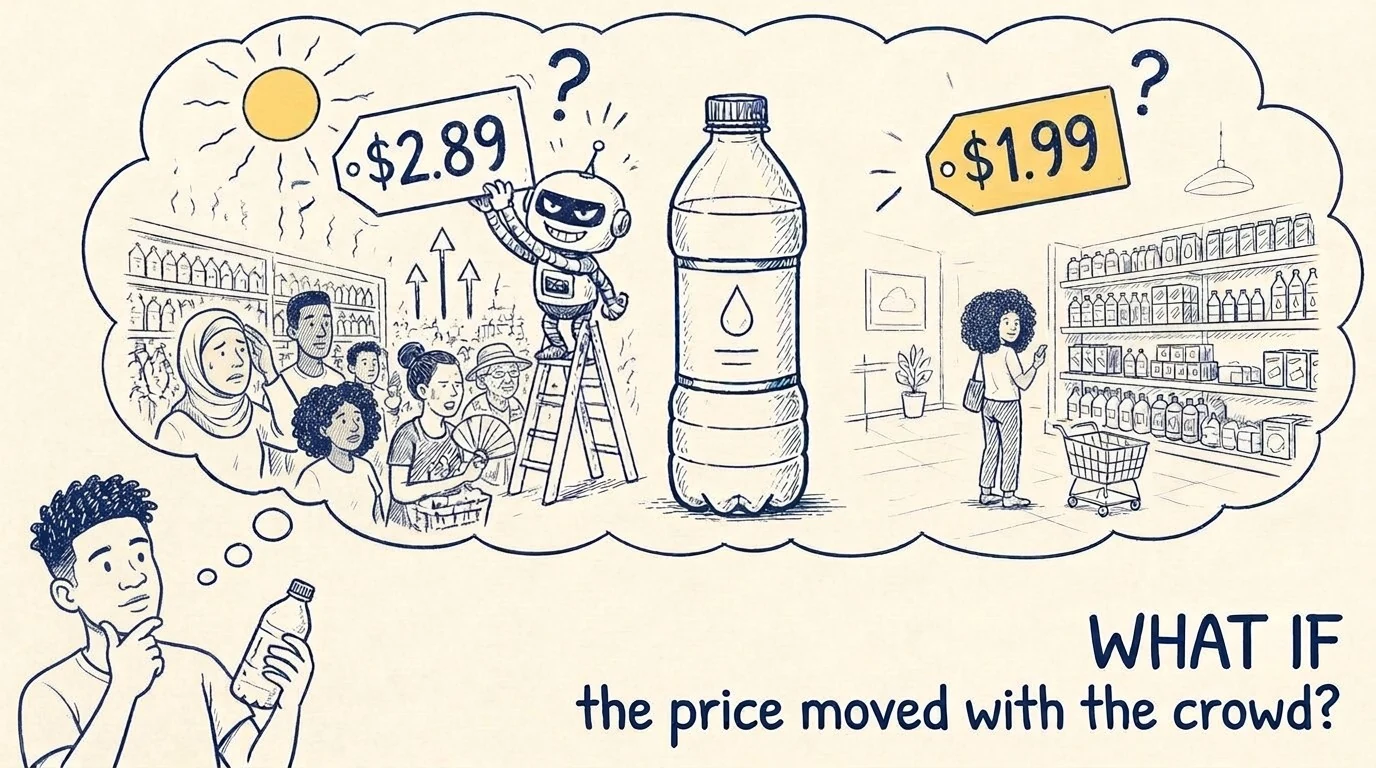
Yesterday, you walked into a store and purchased your favorite drink for $2.49. Today, you walk into the same store, grab the same drink, and it's $2.89. Nothing about the product has changed. The store is simply busier. How would you feel about that transaction?
Now imagine walking into the store during a slower afternoon and finding that same drink for $1.99. Suddenly, you're getting a deal, and you might even decide to grab something to eat. Same technology. Very different feeling about the store.
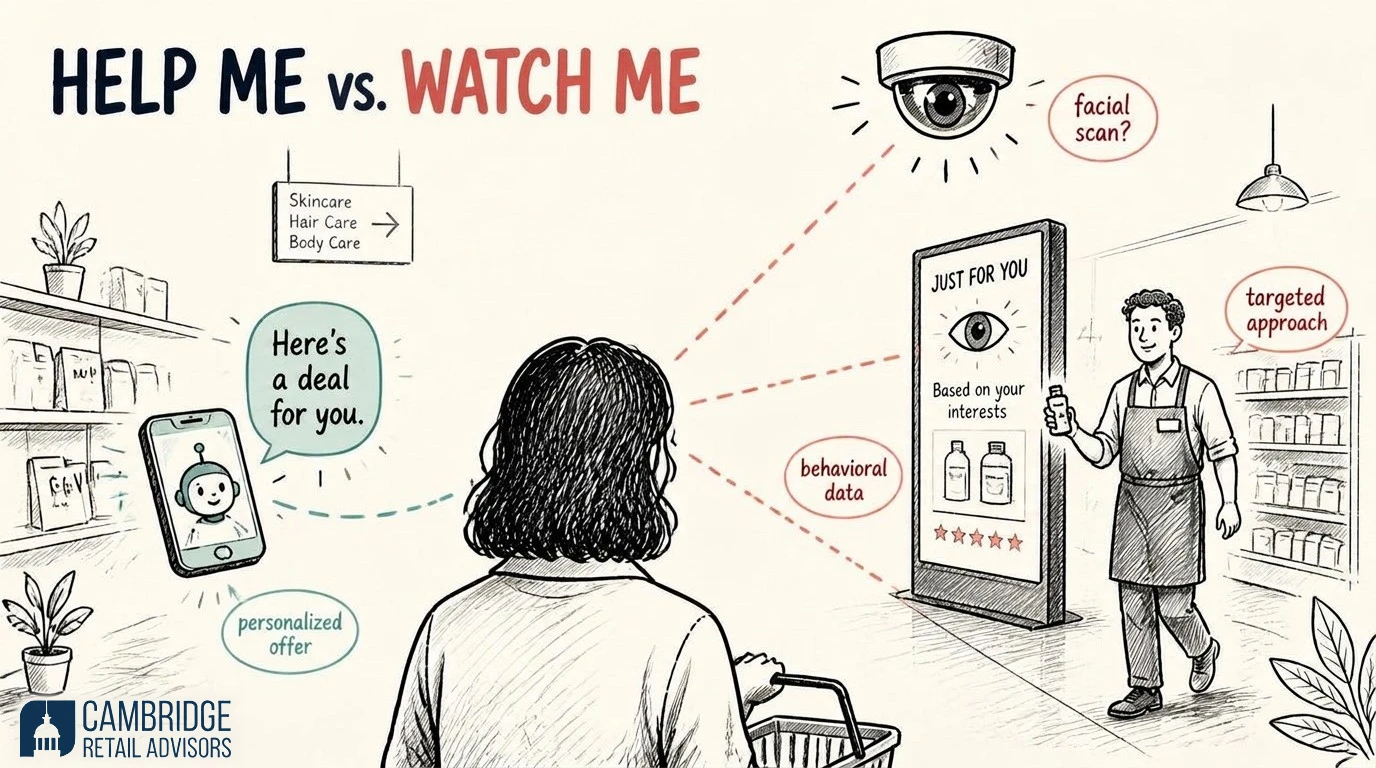
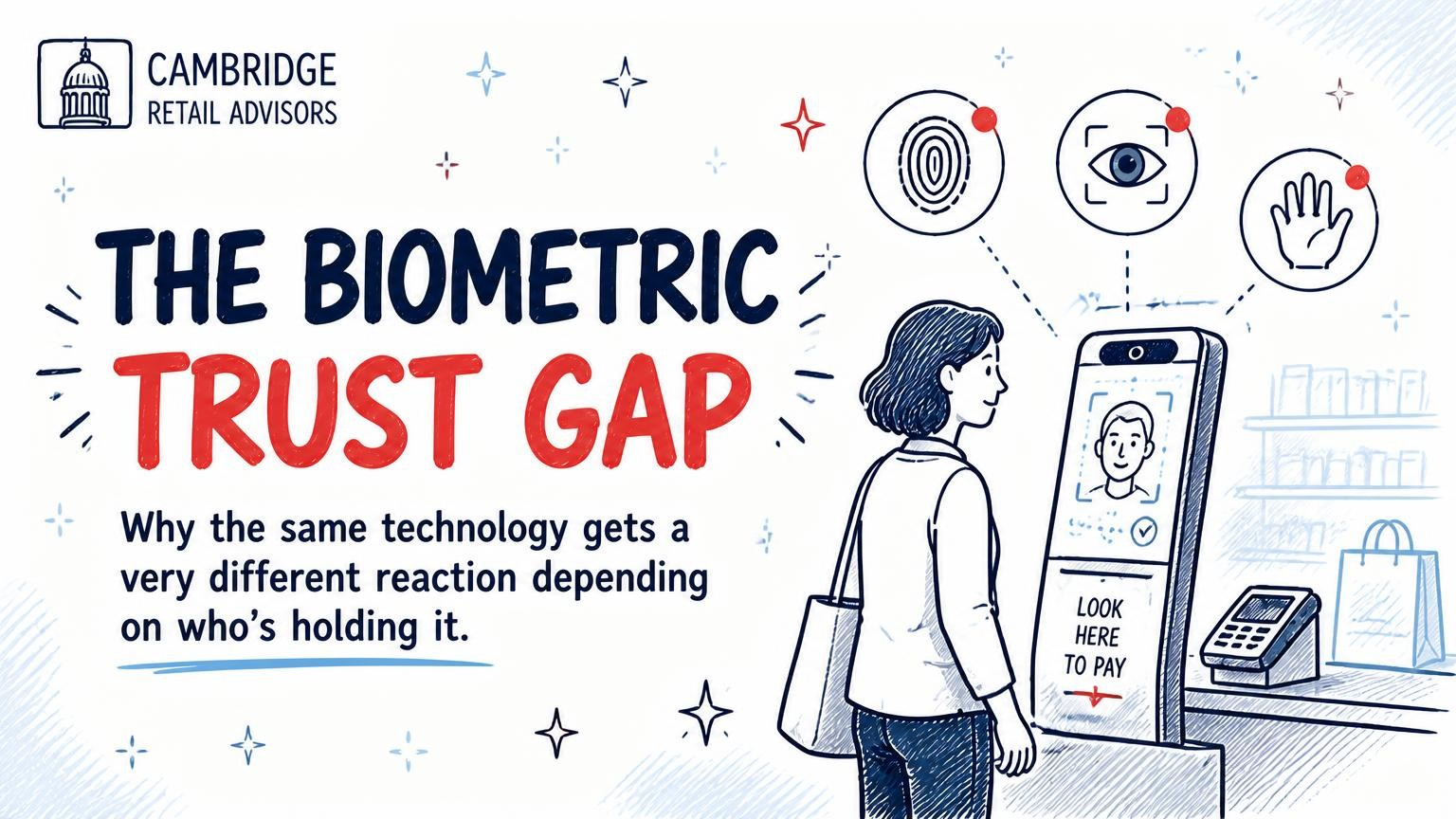
So far in this series, we've looked at technology that recognizes you, helps you, and steps in when something goes wrong. But what happens when nothing is wrong and the technology starts influencing what we purchase or what we pay?
Whose side is checkout on?
What If Privacy Isn't the Problem?
In our consumer research, we asked shoppers how comfortable they would be with real-time demand-based pricing, both when the retailer knows who they are, like a loyalty member, and when it doesn't.
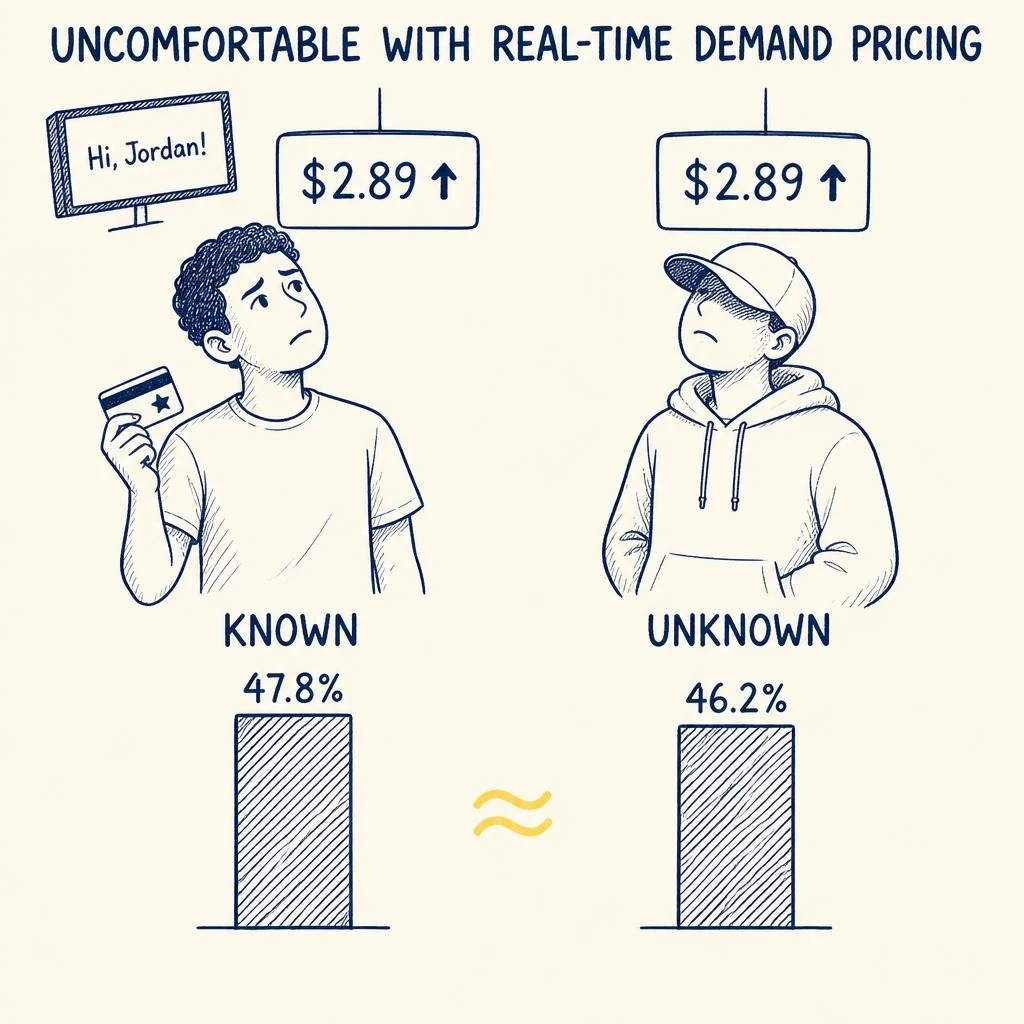
That's what surprised me. Knowing the customer doesn't change the level of discomfort much. Maybe the concern has less to do with how much the retailer knows about us and more to do with what they're doing to the deal.
There's nothing inherently wrong with prices changing. Retailers have been doing it for decades through happy hours, seasonal promotions and markdowns. Think about your local grocery store, where a consumer packaged goods (CPG) company helps fund a promotion, the customer saves money, and the retailer hopes to encourage a larger shopping trip. Everyone has an opportunity to benefit.
Likewise, when manufacturing, packaging or transportation costs increase, retailers may need to adjust prices. It gets harder when prices move often and nobody says why. Customers may not even recognize when a price change is working in their favor.
I'm not suggesting retailers need to explain every price adjustment across thousands of products. But why not make that information available through a website, mobile app or even a QR code on a digital shelf label? The FTC is already looking into personalized pricing. Pricing based on what's happening in the market is one thing. Pricing based on what you know about me is another.
When Does Selling Become a Service?
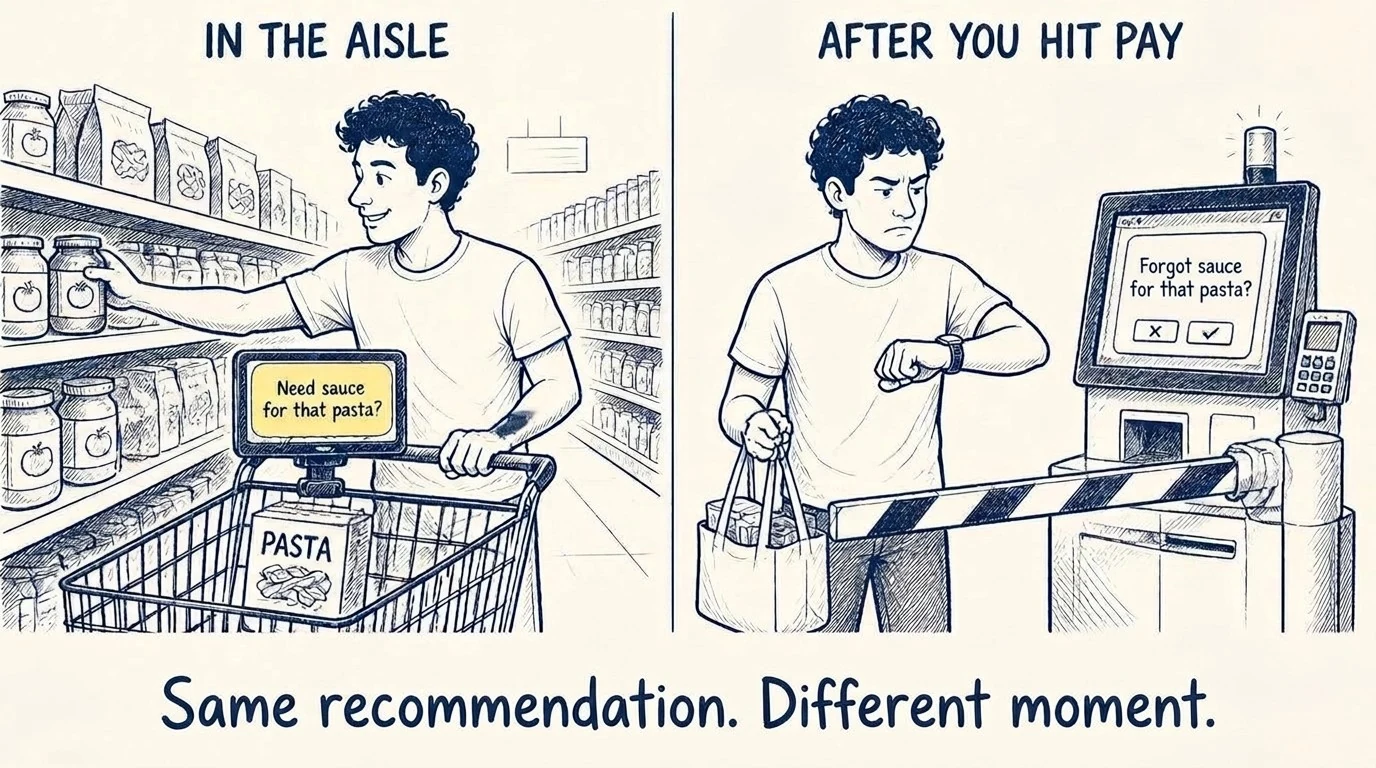
You've finished shopping, everything is scanned, and you're ready to pay when the system suddenly recommends another product. In our research, only 41.6% of known customers and 35.4% of unknown customers expressed comfort with AI-generated add-on recommendations. That's lower than the comfort levels for camera-based item recognition and AI-powered scan-error detection, even though recommendations don't inherently require surveillance.
Shoppers 18–34 were the most open, at 58.1% when known, compared with 27.9% for those 50–64. Looking at the younger shoppers, there's clearly an opportunity here. But that doesn't mean they're interested in everything you have to offer. Retailers have always encouraged customers to purchase additional products, and there's nothing wrong with that. What matters is whether the recommendation makes sense and when it's presented.
The same recommendation in the aisle can feel like help. After you hit Pay, it can feel like a tollbooth.
Imagine you're hosting someone special for dinner. You have a $50 budget, and there's a particular cut of meat you know they enjoy. You want that to be the centerpiece of the meal, but you still need to figure out the rest of the menu. What if the retailer could help you put that dinner together?
There might be a manufacturer-funded promotion on a side dish that fits perfectly, or a less expensive ingredient of comparable quality that allows you to purchase a dessert without exceeding your budget. The retailer gets another sale, the manufacturer gets someone to try its product, and you get the dinner you wanted for $50.
Compare that with recommending an inferior product simply because there's a promotion behind it, without explaining the difference in quality. I don't have an issue with a supplier-funded recommendation if it fits what I'm looking for. Just be upfront about what you're recommending and give me the opportunity to say, "Nope, I'm good."
Is Checkout Working FOR Me, WITH Me or ON Me?
I think there's a useful way to look at these experiences from the customer's perspective. It doesn't matter whether it's an associate, a checkout screen, a pricing rule or an AI agent. Who is it working for?
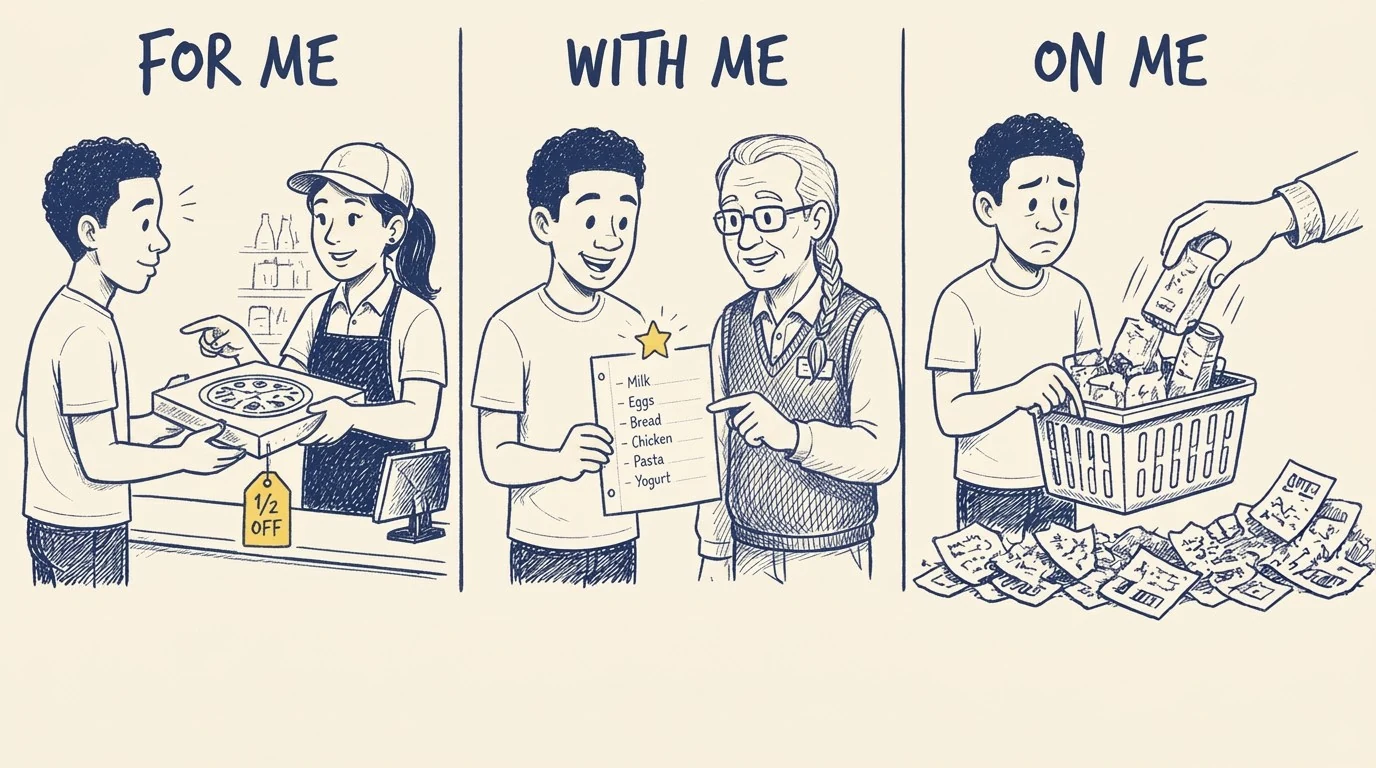
FOR Me — Creating Customer Value
Sometimes the customer receives most of the immediate benefit. Think about a retailer automatically applying a discount you qualify for or a pizza restaurant offering half-price pizzas. You might purchase only the discounted pizza, and the retailer might make less profit on that transaction.
But think about what happens next. You bring that pizza to a friend's house to watch football, everyone enjoys it, and someone who doesn't normally order from that restaurant decides to give it a try the following weekend. You got a great deal, and the restaurant may have gained another customer.
WITH Me — Creating Shared Value
Working with the customer might mean finding a better deal, recommending a product that's a better fit or helping someone save money when they weren't expecting it. Sometimes the retailer makes more money and the customer gets an exceptional experience. Other times, the customer saves money, and the retailer gains a loyal customer who tells their friends and family about it.
The benefits don't have to be equal, and they don't always have to be financial. We both get something out of the experience, and I still get to decide what's right for me.
ON Me — Optimizing the Customer
This is where things can become one-sided. Products are recommended because they have higher margins, suppliers are paying to promote them, or someone is trying to increase basket size. But does the recommendation actually make sense for the person receiving it?
We've all received sheets of coupons or promotional emails containing offers that have little relevance to our lives. Over time, we stop looking at them. Compare that with a retailer that consistently sends you something useful, interesting or relevant. You're much more likely to pay attention the next time something comes through.
Customer attention is a currency, too. Retailers should be careful about how they spend it.
We're not asking retailers to stop selling. I'd like to see more WITH Me moments, where both the sale and the customer experience win.
Who Made That Call?
Somebody decided what the pricing system should optimize. Somebody determined which recommendations should appear, whose products should be promoted and how success should be measured.
AI didn't make that call.
A bigger basket tells us how much the customer spent today. It doesn't tell us whether we've given them a reason to come back tomorrow.
THE LENS
The short version for your next meeting.
The key points, what to try, and the question to ask your team. Free PDF. No form.
Get The Lens