

Customer experience and store operations teams have had this on their wish list for years: recognize the customer as early as possible. Ideally, when they arrive on property, walk into the store, or enter whatever experience the retailer is trying to create.
A lot of loyalty programs have been built around that idea. Sometimes it's straightforward loyalty recognition. Sometimes it's knowing a customer has arrived for a pickup order so the store can start preparing it. Sometimes it supports operations, security, or loss prevention.
But the opportunity goes beyond identifying someone.
If I know who the customer is, I can apply benefits, understand the relationship, and personalize the experience. More importantly, I can give associates enough context to be proactive.
That's the old black-book model of personal selling: knowing the customer, knowing what they tend to buy, and recognizing when there's an opportunity to help. The difference now is that technology can give an associate some of that context even when the customer isn't someone they personally know.
Which raises the bigger question. Once the brand knows who I am, what is that recognition actually being used to do?
It might help me. It could apply a discount, show me a running total, recognize the items I'm buying, or remove friction before I ever reach checkout.
But that same recognition can also operate quietly in the background. It can observe where I am, connect behaviors, and trigger actions I may not even know are happening.
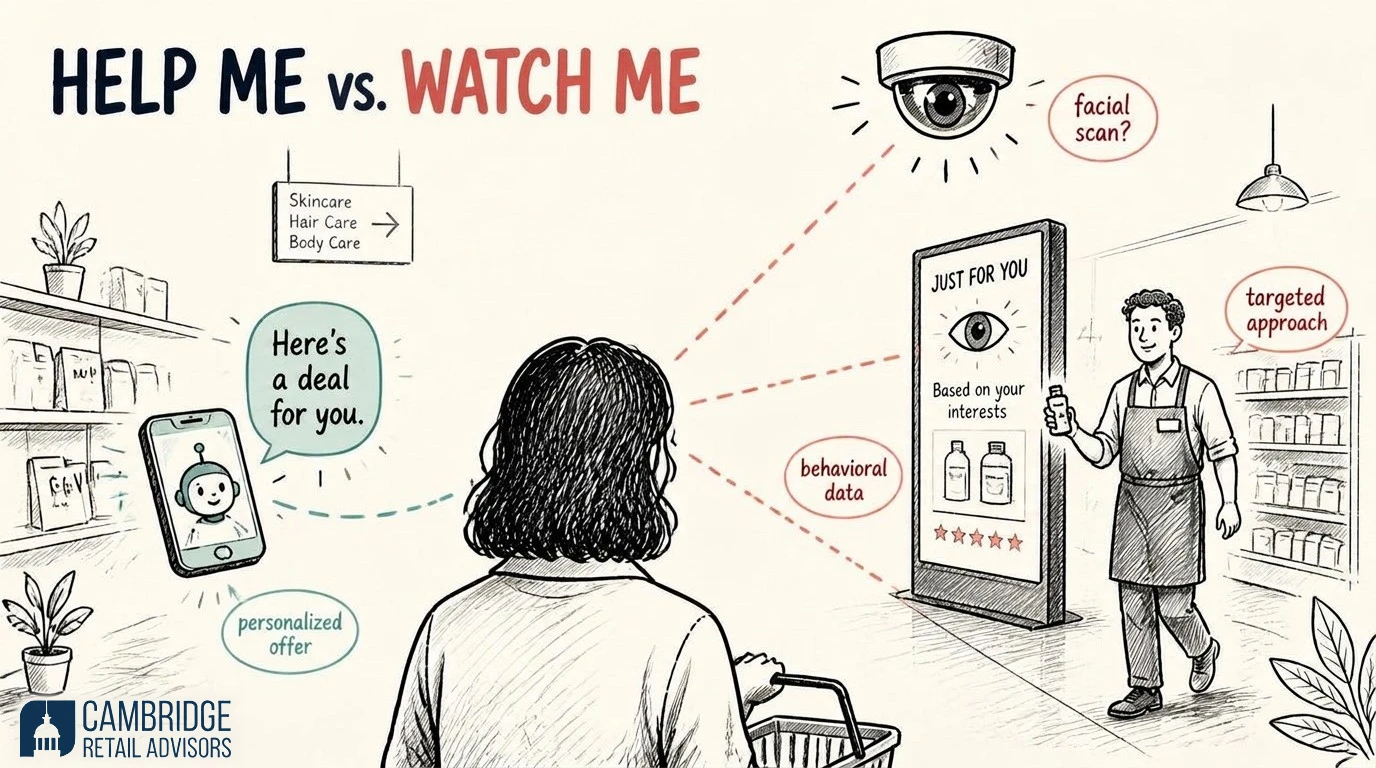
That's where the line between help me and watch me starts to matter.
In August 2026, we surveyed 500 U.S. consumers ages 19 to 64. Each person rated the same checkout scenarios twice: once as a known shopper, where the store knows them through a loyalty account, app, or purchase history, and once as an unknown shopper with no profile linked.
In our survey, unknown meant exactly that. But in practice, it doesn't have to be all-or-nothing. A system could recognize a returning customer through an anonymous identifier, remembering shopping patterns or past questions while keeping their name and personal information out of it. The customer could let that history continue, limit it, or wipe it after the visit.
Help Me: Recognition Performs Best When the Customer Benefit Is Easy to See
The strongest-performing scenario was also the least surprising. Customers like it when technology helps them save money.
Automatic discounts led the group, with 78.6% of known shoppers and 67.8% of unknown shoppers comfortable with the experience.
I think about that more broadly than a coupon appearing automatically. It might be points, an offer the customer already opted into, or a nudge like, "Add one more and you qualify for this promotion." Some of that happens today. The opportunity is making it less dependent on the customer remembering every promotion or figuring it out after the transaction is done.
Smart cart totals followed at 68.2% comfort when known and 60.4% when unknown. That one makes sense to me too, because checkout becomes a bottleneck fast.
Think about self-checkout. There's a line behind you, prompts on the screen, and a feeling that you need to keep moving. Even at a staffed lane, that pressure kicks in once the transaction starts. That's not the moment to review pricing, question an offer, or rethink the basket. A running total lets the customer do all of that before they ever get there.
Camera-based item recognition also performed well, at 67.0% comfort among known shoppers and 62.0% among unknown.
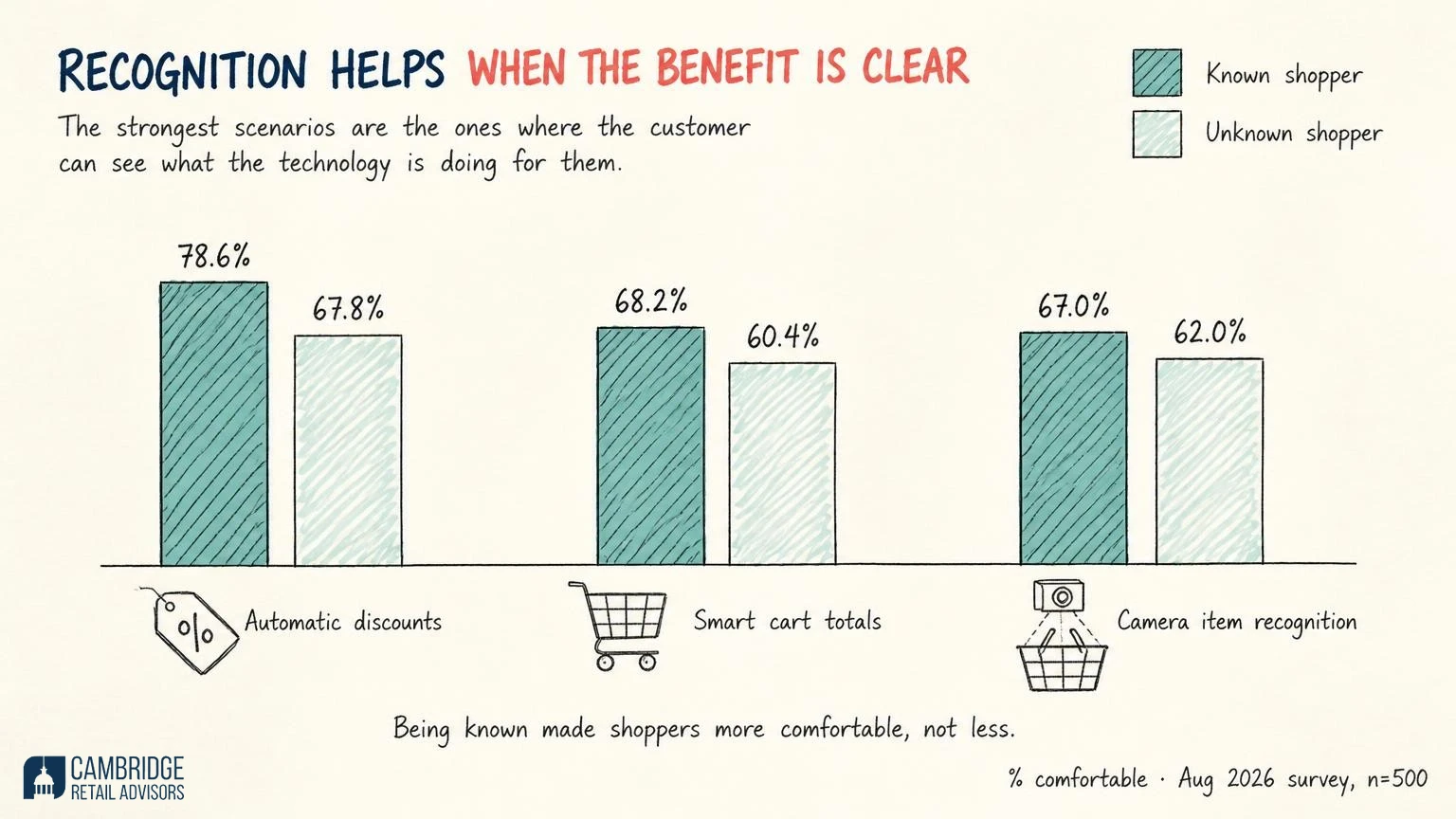
Those examples have something in common. The customer can see what the technology is doing for them.
We didn't ask respondents why they were more comfortable with these scenarios, so I don't want to overstate what the data proves. But the strongest use cases are also the ones where the value is easiest to see.
That matters if we think about the AI agent itself as part of the experience, whether it's on the customer's phone, a smart cart, or a digital display. It becomes a little assistant on the customer's shoulder saying, "Here's something that may help you," or "Here's why I'm showing you this." It saved me money. It helped me understand my basket. That's a very different feeling from technology doing something quietly in the background.
And the same black-book rule should apply to that AI agent. It has to earn the interaction. A good salesperson doesn't walk up cold and start pushing products. They connect first. They read the customer. They figure out whether the person wants help, wants space, or is open to a recommendation.
AI should have to do the same thing.
The goal shouldn't be to recognize someone and immediately trigger the next message, offer, or prompt. It should be to understand when interaction is useful and, just as importantly, when it isn't. Some customers will welcome proactive help. Others want a light touch. The best version may be almost invisible: enough context to provide better service, without making it obvious that a system has been following everything the customer does.
Automatic app or location check-in starts to blur that line. Comfort still outweighs discomfort — 58.6% to 26.6% when known, and 47.4% to 36.4% when unknown — but the experience is doing something different.
There can still be a clear benefit, like having a pickup order ready or skipping a manual check-in. But now the technology isn't just recognizing what's happening in the transaction. It's recognizing that the customer is there.
That's where help me begins to move toward watch me.
Watch Me: When Recognition Starts to Feel More Like Surveillance
Check-in shows that watching doesn't have to begin with a camera. The line gets clearer when recognition moves into more frictionless forms. The shopper doesn't need to present a phone, scan a code, or identify themselves at all. The system can recognize an item, a face, or a vehicle on its own.
And the watching can go well beyond knowing who walked through the door. A retailer may be able to see what a customer looks at, how long they spend at a display, what they pick up and put back, and where they move through the store.
Some of that is useful for operations, retailers, brands, or loss prevention, and customers probably understand some of it is happening already. Where it starts to feel different is when those signals begin triggering activity around the person without them understanding why.
Maybe a manager gets a notification that someone has been looking at a product for three minutes and sends an associate over. Maybe the store is chasing a sales target and the system flags customers most likely to buy a certain item. Maybe a sampling team gets an alert because someone just put a related product in their basket. Or the associate suddenly shows up with exactly the product the customer was just considering.
Any one of those could actually be helpful.
But if it starts to feel like the systems, employees, brands, and sales targets are all working together behind the scenes to push the customer toward the next purchase, the experience changes.
If I'm looking at two products and someone genuinely helps me understand the difference, that's useful. If I suddenly have three different people, screens, and prompts pushing me toward the same item because an algorithm decided I'm a high-probability conversion, that's a sales funnel closing around me.
The technology may be doing exactly what it was designed to do. The customer may simply experience it as, "Why does it suddenly feel like everyone is watching me?"
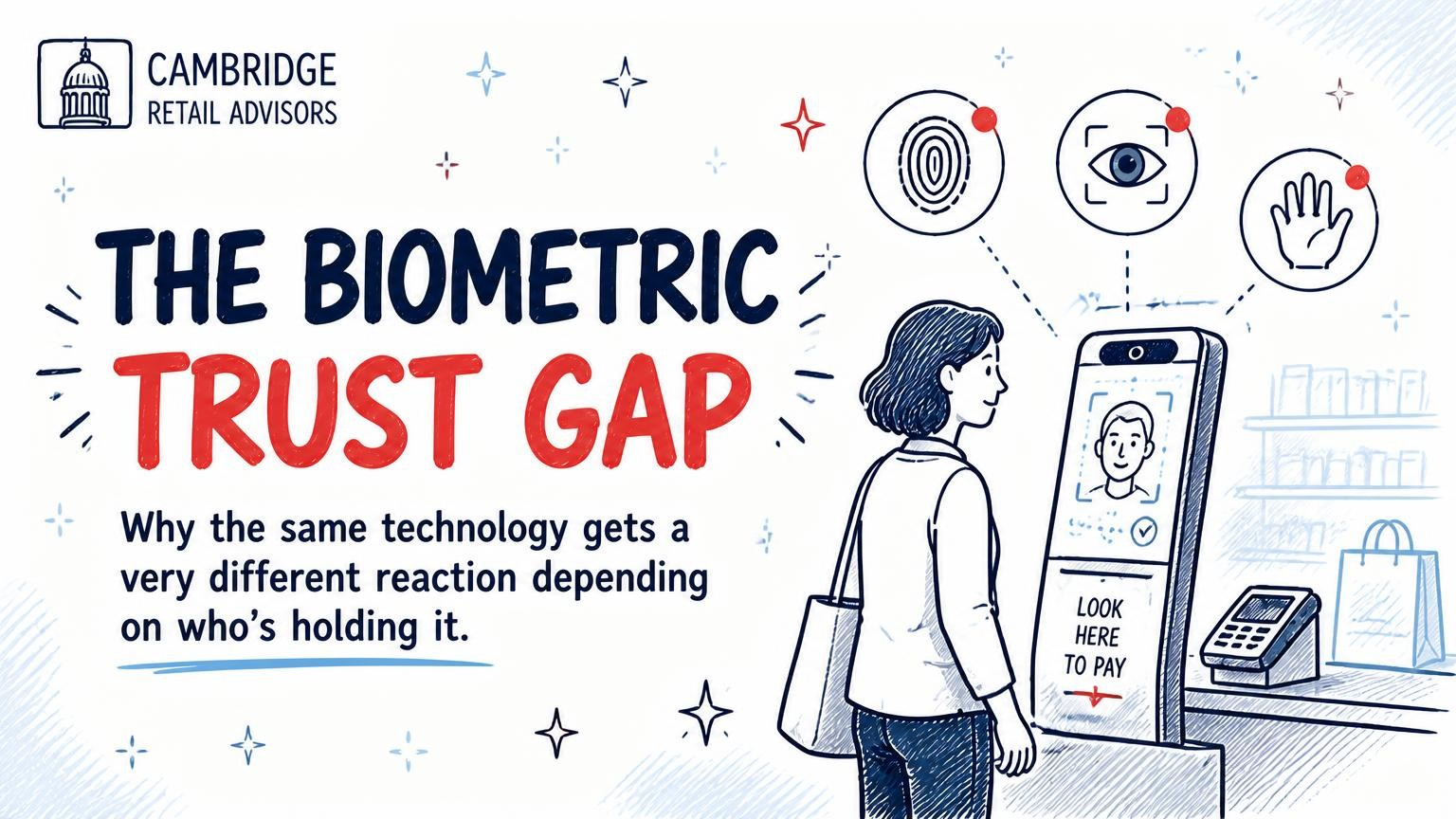
The survey data points in the same direction. Smart cart totals reached 68.2% comfort among known shoppers, and camera-based item recognition reached 67.0%. Facial recognition falls to 45.8%, with 42.4% uncomfortable. License-plate recognition drops to 36.2%.
Cart. Face. Car.
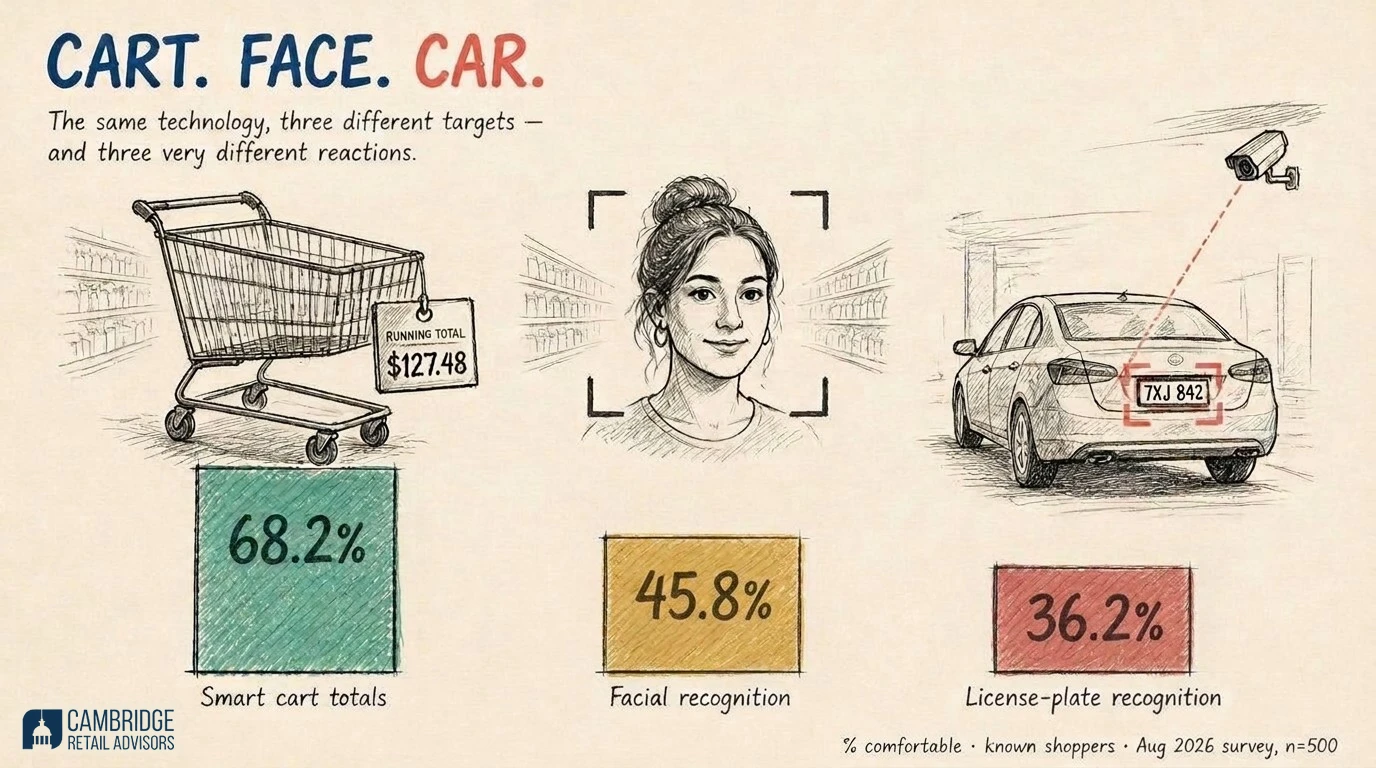
The better question is what the camera is looking at. Recognizing merchandise lands differently from recognizing the person, and recognizing the person lands differently from recognizing their car.
License-plate recognition is especially telling, because even an existing relationship doesn't rescue it. Comfort rises from 28.6% when unknown to 36.2% when known, but 54.0% of known shoppers are still uncomfortable.
So what's being sensed matters, how closely it's tied to the individual appears to matter, and I think what happens after that signal is captured may matter just as much.
We didn't ask whether the discomfort came from privacy, loss of control, fear of tracking, or something else. That's the next question, because transparency may matter as much as the technology. Would customers respond differently if brands clearly explained what was being recognized, why, what they got out of it, and how to turn it off? Would a regular check-in on what recognition has actually done for them change the response?
We still need to test that. But one thing is already clear: trust can't be built by deploying the technology and assuming the customer understands it.
The Payment-Token Boundary
Watching also doesn't require a camera. A brand can recognize a returning shopper through something they already use: payment.
Comfort with previous-card recognition was relatively weak. Among known shoppers, 46.2% were comfortable and 39.2% uncomfortable. Among unknown shoppers, comfort fell to 39.0% and discomfort rose to 44.6%. That puts card recognition about even with facial recognition among known shoppers.
A loyalty program is visible. The customer knows they joined and expects benefits in return. Payment recognition is much quieter. If a payment token becomes an identifier, the real question is whether the customer knows it's happening, what it's being used for, and what control they have.
The weaker response suggests that recognition alone is not the same thing as relationship.
Recognition Should Feel Like Good Service
Customers aren't rejecting recognition outright. They respond differently depending on what it's being asked to do. If brands are going to recognize customers earlier, more often, and through less visible methods, transparency can't be an afterthought.
Think about the best salesperson, concierge, or maître d'. They use what they know about the customer to help them: to guide the experience, connect with them, and recommend what makes sense, in the right order. They don't just throw a bunch of stuff at them.
Recognition should work the same way, whether it's an associate or an AI agent. How that information gets used should clearly benefit the customer. Of course, it has to benefit the company too. But whatever shows up — on their phone or from an associate — shouldn't come out of left field or depend on something the customer didn't know was happening.
"I see you put this in your cart." Well, how did you know? If the customer doesn't know you're watching, that's the moment it can stop feeling like help.
The question is not simply whether the system knows who I am. It's whether that recognition is being used to help me — or simply to watch me.
THE LENS
The short version for your next meeting.
The key points, what to try, and the question to ask your team. Free PDF. No form.
Get The Lens