

In The Biometric Trust Gap, we looked at whether customers are comfortable using biometrics, and said there was a second question we'd come back to. This is that question: is payment alone enough to make customers want to enroll and use biometrics?
Payment is already pretty easy. Customers can tap a card, use Apple Pay or another mobile wallet, and in many cases they are already using their face or fingerprint to authenticate the payment on the device in their hand.
So if the proposition is simply replacing a card or phone tap with a palm or facial scan, how much additional value are we really creating for the customer?
Amazon One Gives Us a Real-World Test
If you have shopped at Whole Foods over the last few years, there is a good chance you saw Amazon One sitting at the checkout. Amazon rolled it out to more than 500 Whole Foods stores, letting Prime members identify themselves for their benefits and pay with the same palm interaction.
In January 2026, Amazon announced it was discontinuing Amazon One, with palm readers removed by June 3, and cited limited customer adoption.
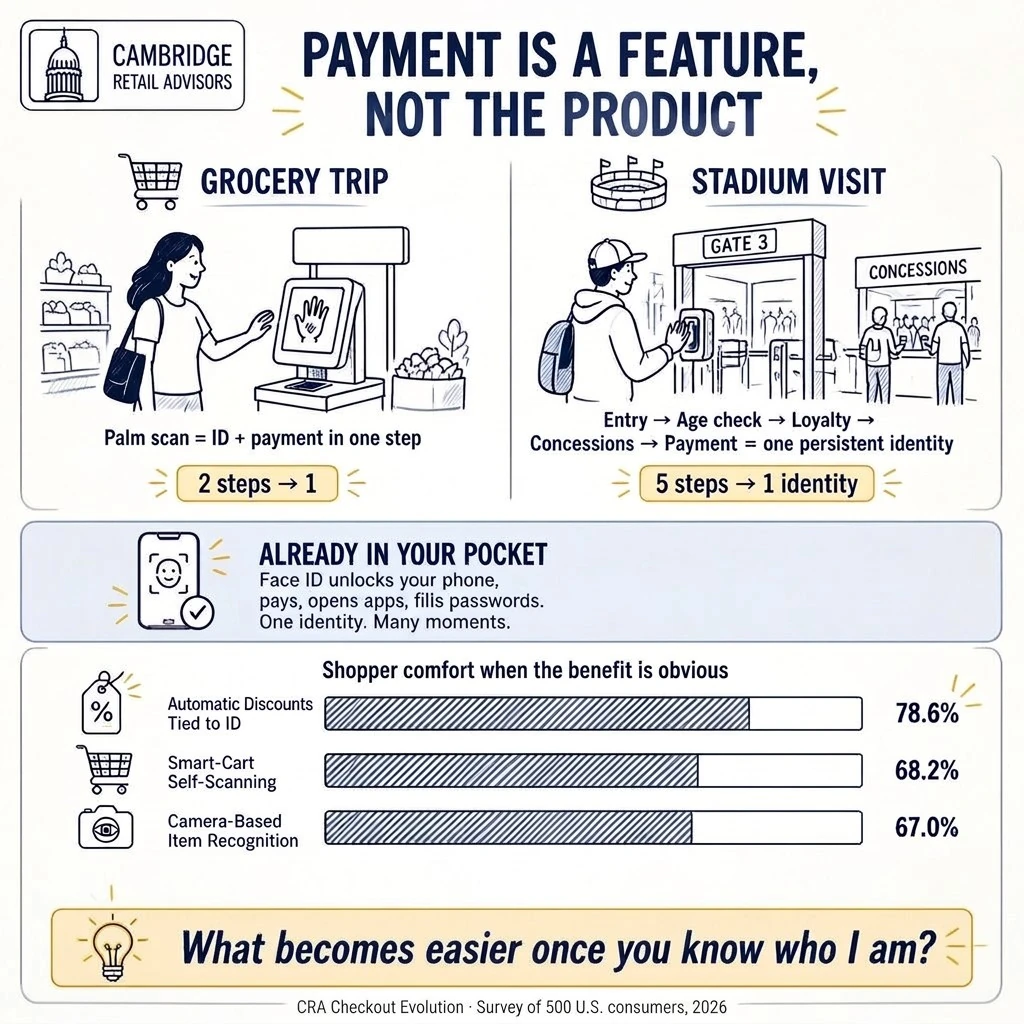
The technology worked, and there were clearly customers who liked it enough to keep using it. But not enough customers saw enough reason to enroll in the first place. In a routine grocery trip, collapsing two familiar steps into one may not have felt like a major change for someone who already had a phone or card in hand.
The lesson may not be that biometric payment does not work. It may be that payment alone is not the golden ticket.
Stadiums Show a Different Value Proposition
Think about what people actually carry into a stadium. A phone, an ID, one or more cards, maybe a wallet or purse. Throughout the event, they may have to pull those things out repeatedly for entry, age verification, loyalty and payment.
If biometric identity can establish who I am once and then help carry that identity through the experience, it starts solving several problems at the same time: faster entry, easier age checks, fewer things to carry or lose, and payment. The biometric does not have to prove its value one payment at a time.
That idea does not have to stop at stadiums. Resorts, cruise ships, theme parks and other environments where a customer stays inside a brand experience for hours or days could create a similar opportunity.
We Already Have This Model in Our Pockets
Face ID or fingerprint authentication did not become useful simply because it replaced typing a passcode. The value grew as the same biometric started helping customers unlock the device, approve payments, access apps and accounts, and secure sensitive information.
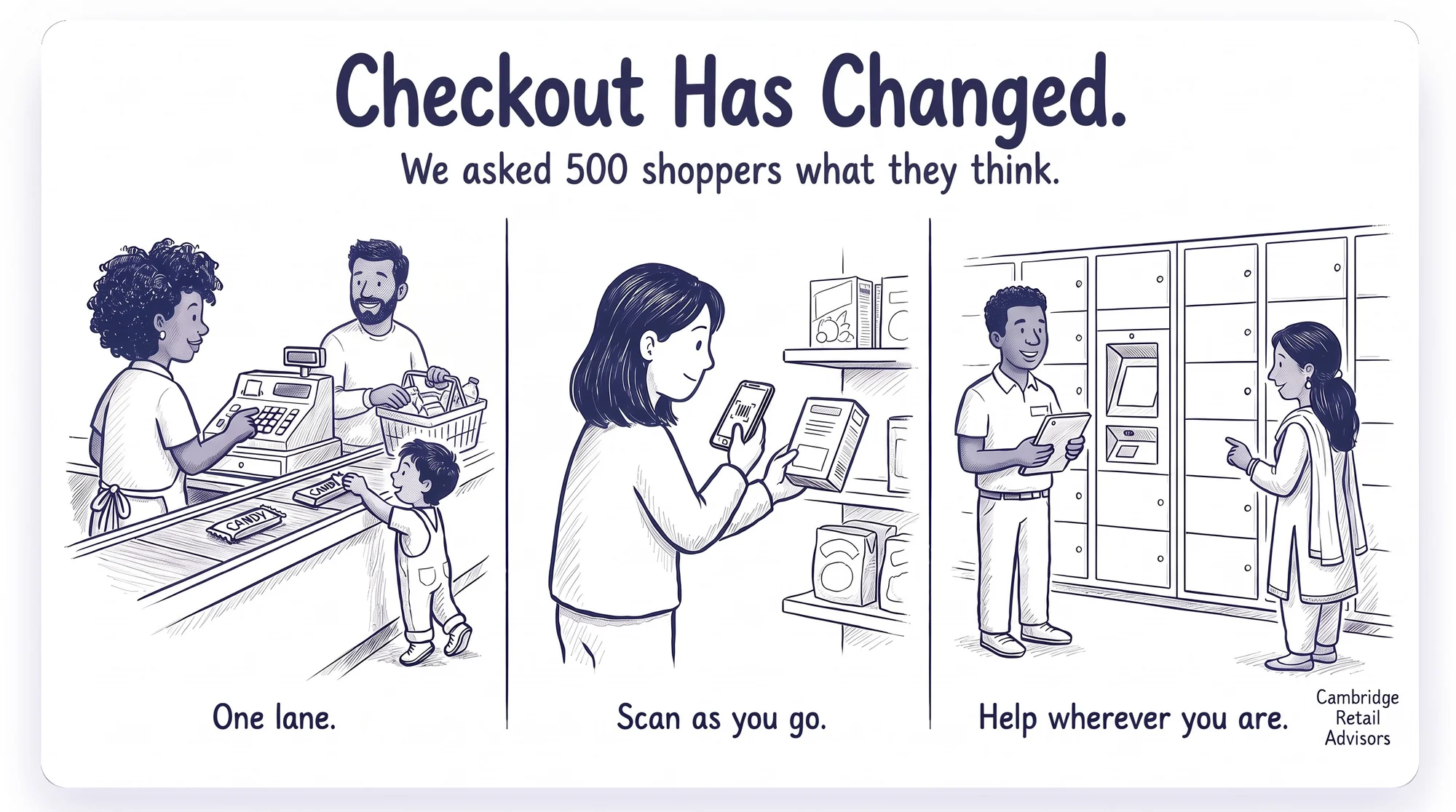
Our checkout research points the same way. In our survey of 500 consumers, 78.6% were comfortable with automatic discounts tied to identification, smart-cart experiences reached 68.2% comfort, and camera-based item recognition reached 67.0%. Those questions were not about biometric payments specifically, but customers appear more receptive when technology recognizes them, applies a benefit or removes a step.
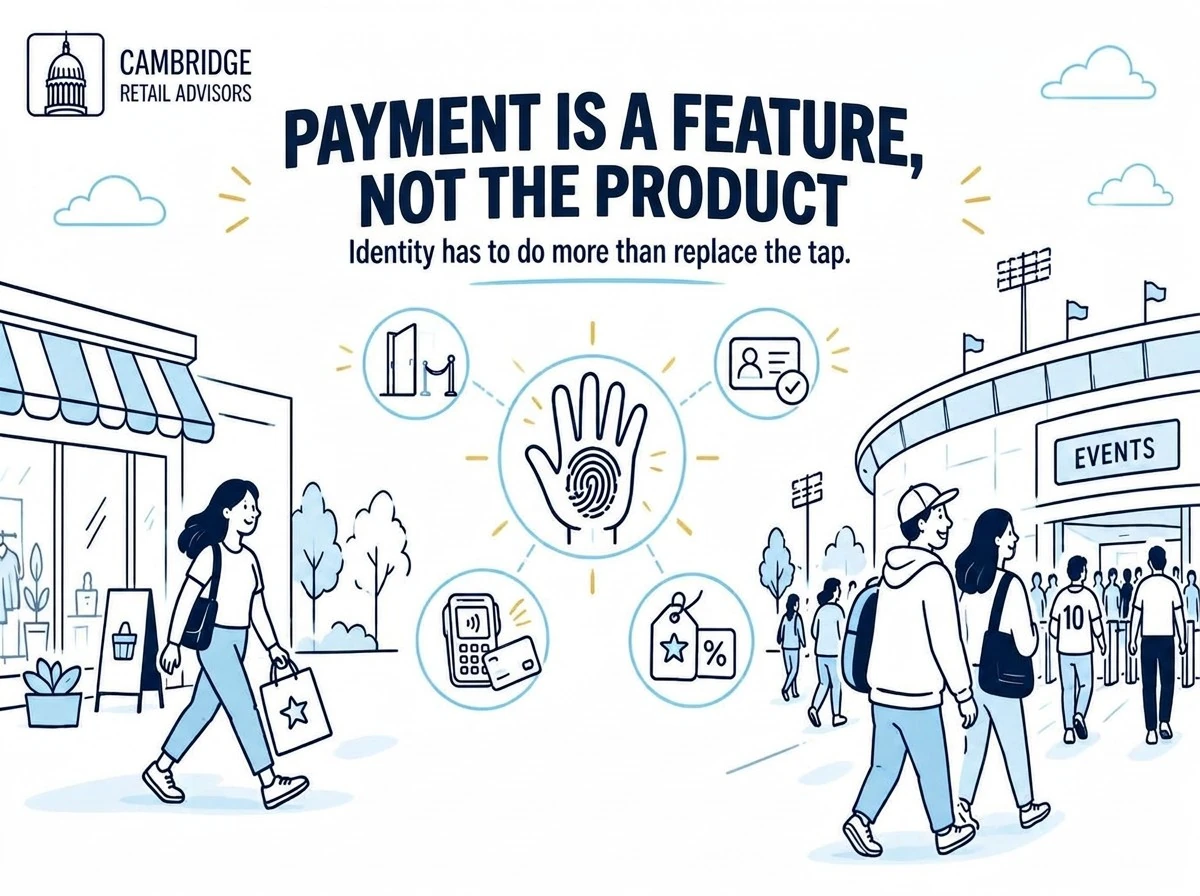
Maybe Payment Is a Feature, Not the Product
Payment may ultimately be one feature of biometric identity rather than the entire thing customers are adopting. That does not mean every brand should try to solve everything on day one. It means the first use case needs to remove enough friction — payment plus age verification, entry plus concessions — that the customer sees an immediate return for enrolling.
Before a brand asks which biometric payment technology it should deploy, there may be a more important question:
What becomes meaningfully easier, safer or better for the customer once we know who they are?
Trust may get the customer to consider saying yes. The experience still has to give them a reason to do it.
THE LENS
The three-page version for your next meeting.
The key numbers, three things to try, and the question to ask your team. Free PDF. No form.
Get The Lens