

When CRA asked 500 U.S. consumers ages 18–64 which checkout experiences they would prefer over a traditional staffed lane, scan-as-you-shop came out on top at 51.2%. AI self-checkout followed closely at 49.4%, with AI-assisted staffed checkout coming in third at 45.6%. Scan-as-you-shop leading the group wasn't much of a surprise. After all, we hear plenty about consumers wanting frictionless experiences, where they can get in, make their purchases, and get out with little interaction. But with an associate-assisted experience finishing so close behind, perhaps that assumption doesn't tell the whole story.
At least from what the survey results suggest, customers want to manage more of the checkout process themselves while still showing interest in experiences that involve an associate. For retailers considering their next checkout investment, it's worth asking where the conversation starts. Is it looking outward at what customers want to accomplish, or inward at the technology and operational challenges the business needs to address? It doesn't have to be one or the other. In many cases, the right investment should accomplish both. But the starting point can influence the experience ultimately delivered.

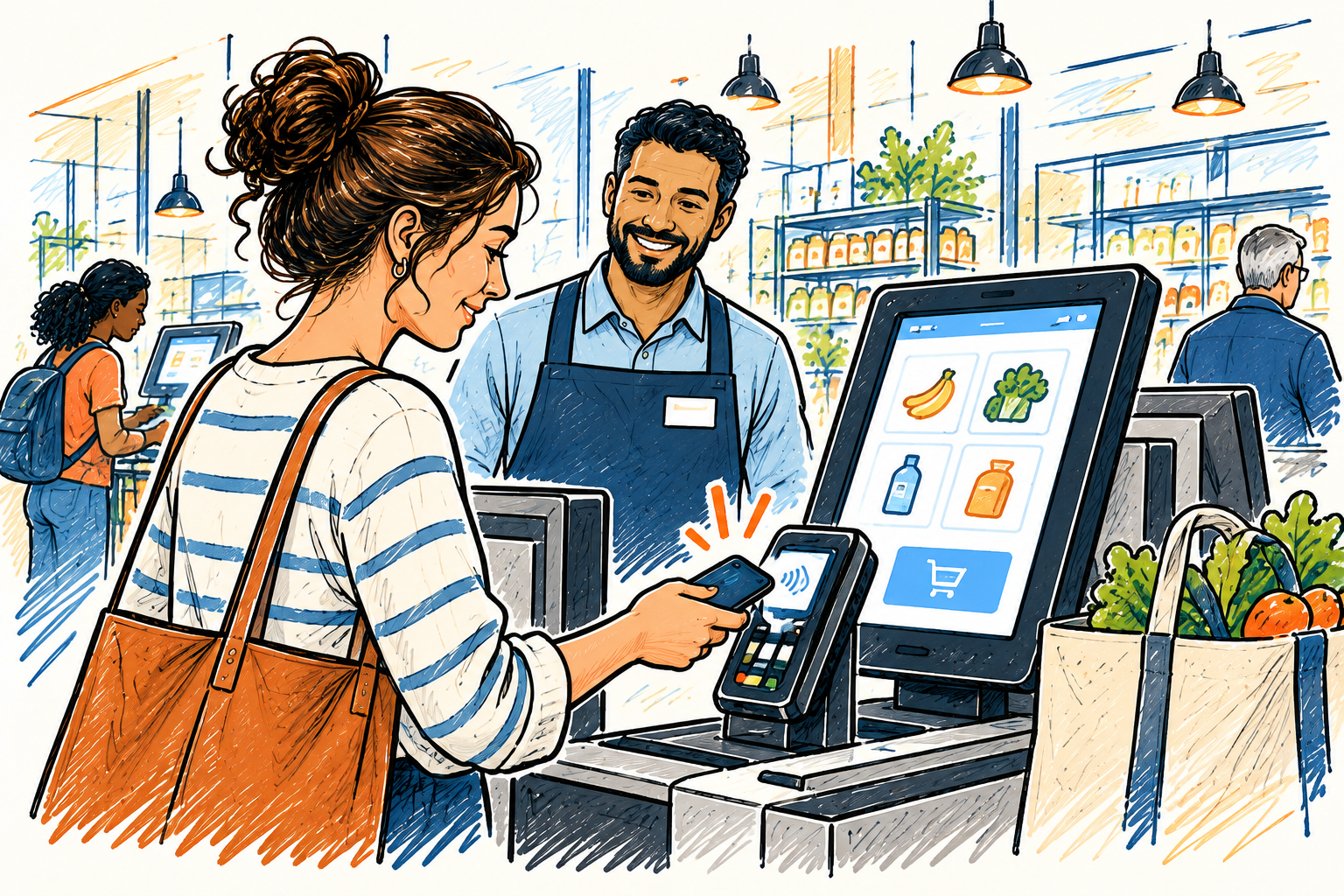
Think about how much control consumers already have when shopping digitally from their porch or couch. They can build their carts, compare products, check reviews, consider warranties, apply loyalty benefits, and know what they're spending before completing a purchase. Scan-as-you-shop brings some of that experience into the physical store, allowing customers to manage their baskets throughout the trip rather than waiting until they reach the register. It also gives retailers a chance to engage customers while purchasing decisions are being made, whether that's suggesting a compatible accessory, providing additional product information, or identifying a promotion that makes sense for what's in their physical or digital basket.
Sam's Club provides a practical example through Scan & Go, which allows members to scan merchandise and pay through their phones. The retailer has also introduced computer vision to streamline purchase verification at the exit. Wegmans, meanwhile, discontinued its original SCAN app in 2022, citing losses associated with the program. Giving customers their own key to the kingdom sounds appealing, but retailers still have to battle shrink, manage store operations, and deliver an experience that works for customers, employees, and the folks back at headquarters.
The Shopping Trip Changes the Answer
One of the more useful findings from our research probably won't surprise many retailers. In fact, the results may match what you'd expect. When consumers were asked how they preferred to check out in different situations, 65.6% preferred self-checkout for baskets of fewer than five items. But when the purchase involved a high-value item, such as electronics or jewelry, that dropped to 24.5%. These purchases often require a greater investment of time and money, and let's face it, there's some disappointment that comes with getting an expensive purchase wrong. Someone stopping for a few everyday items may simply want to scan, pay, and leave, while someone purchasing an expensive television or piece of jewelry may appreciate help comparing products, understanding warranties, or feeling more confident about their decision.
That fits with what caught our attention about the relatively close results for AI self-checkout and AI-assisted staffed checkout. Both attracted considerable interest, even though one puts more control in the customer's hands while the other keeps an associate involved. But there's a middle ground here as well. Two customers buying the same television might need completely different levels of assistance. One has done the research, knows exactly what they want, and is ready to check out. Another has questions about features, warranties, or whether they're getting the best value. Someone else might just need a little reassurance before making the purchase. Understanding those different levels of assistance should be part of the retailer's technology and staffing decisions.
Younger Shoppers Challenge Some Familiar Assumptions
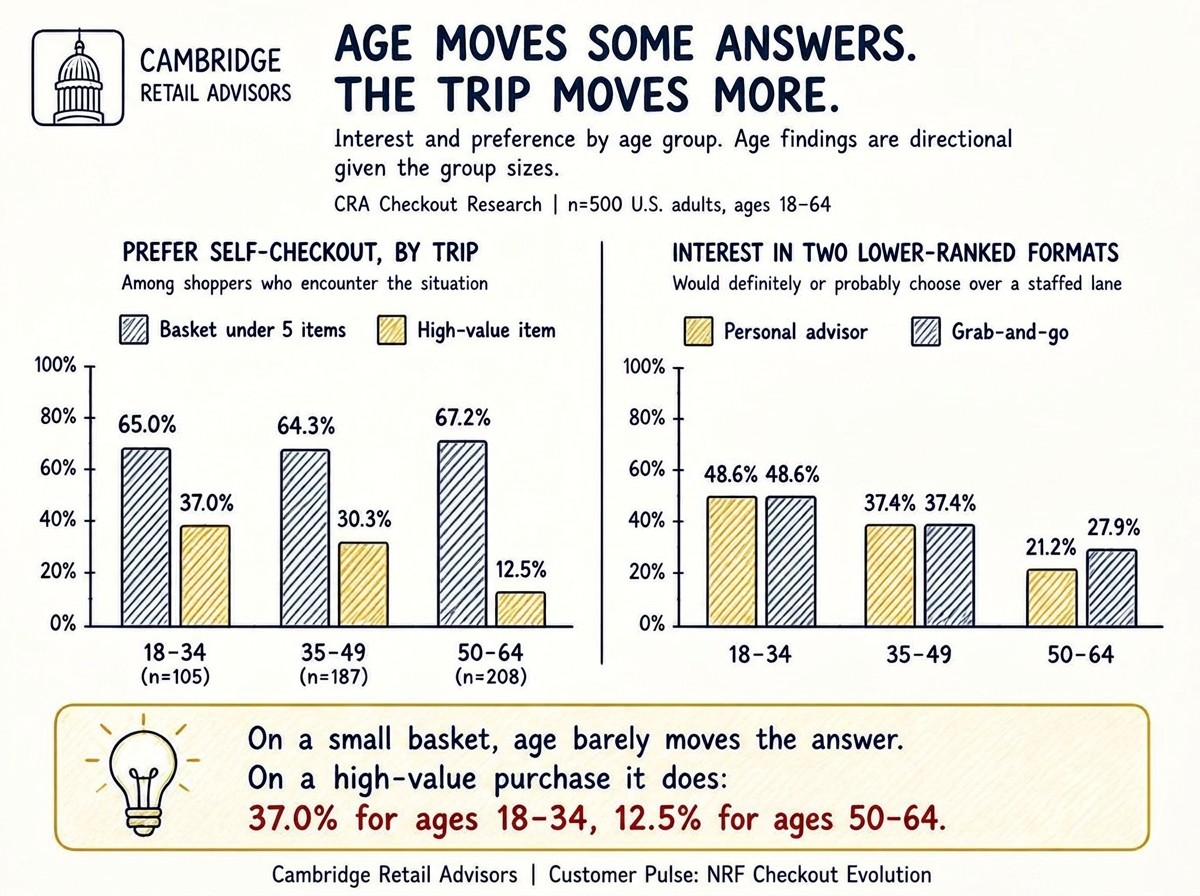
The age breakdown tells us more. Across all respondents, grab-and-go attracted 35.8% interest, while personal advisor finished at 33.0%. Those were the two lowest-ranked experiences tested, but among shoppers ages 18–34, both reached 48.6%. AI self-checkout was still the leading choice for that age group at 65.7%, which makes the interest in personal advisors stand out. Younger consumers are often described as wanting fewer face-to-face interactions, yet nearly half expressed interest in a more personalized shopping experience.
The pattern really starts to change with age. Having a personal advisor on hand was of interest to 37.4% of shoppers ages 35–49 and 21.2% of those ages 50–64. Grab-and-go followed a similar direction, at 37.4% and 27.9%. But when looking at shopping situations, some of those differences become less pronounced. For baskets of fewer than five items, preference for self-checkout was 65.0%, 64.3%, and 67.2% across the three age groups. For high-value purchases, however, 37.0% of shoppers ages 18–34 preferred self-checkout, compared with just 12.5% of those ages 50–64.
Shopping situations deserve as much attention as demographics. For a basket of fewer than five items, preferences look remarkably similar across age groups. When the purchase involves a high-value item, the differences become more noticeable. The survey doesn't tell us why shoppers selected a particular experience, and the age-group findings should be viewed as directional given the smaller sample sizes. But there's enough here to make retailers think twice before relying on assumptions about how different generations want to shop.
What Should Retailers Be Asking?
For retail leadership, these consumer research results don't suggest every store needs to offer every checkout path known to the human race just to make everyone happy. Each new fork in the checkout journey introduces costs, integration requirements, operating complexity, and additional considerations around staffing and loss prevention. At CRA, we'd suggest starting by understanding the types of trips customers make, what they're trying to accomplish, and where they value control or assistance. Those findings can then help inform technology selection, store design, and the operating model needed to support the experience.
As you prepare to walk the floors of NRF, attend sessions, and talk with technology providers about meeting the evolving checkout needs of your customers, it might be worth bringing a few additional questions into those conversations. Alongside the KPIs and ROI you're evaluating, whether that's faster transactions, less friction, lower labor costs, or something that helps set your brand apart, consider what your customers are actually telling you. Are they frustrated because checkout takes too long, because they can't get assistance when they need it, or because the available choices don't fit the way they want to shop? Those answers could help shape the conversations you're having at NRF and make sure the investment solves the right problems without creating new ones.
What are you hearing from your customers? Are they asking for faster checkout, more assistance, greater control, or different experiences depending on the trip? We'd welcome hearing what you're seeing. You can also download our brief summary of the CRA consumer research findings as a reference for your own checkout strategy discussions.
THE LENS
The three-page version for your next meeting.
The key numbers, three things to try, and the question to ask your team. Free PDF. No form.
Get The Lens