

Why biometrics may need to do more than replace the tap
Biometrics continue to get a lot of attention as brands across retail and hospitality, along with well-known third-party technology and payment brands such as Apple, Google, and American Express, look for ways to bring the technology into the real world.
And while the technology is already out there, we are still very much in the adoption stage. Brands are testing use cases, customers are being introduced to new experiences, and everyone is still trying to understand where biometrics actually make sense.
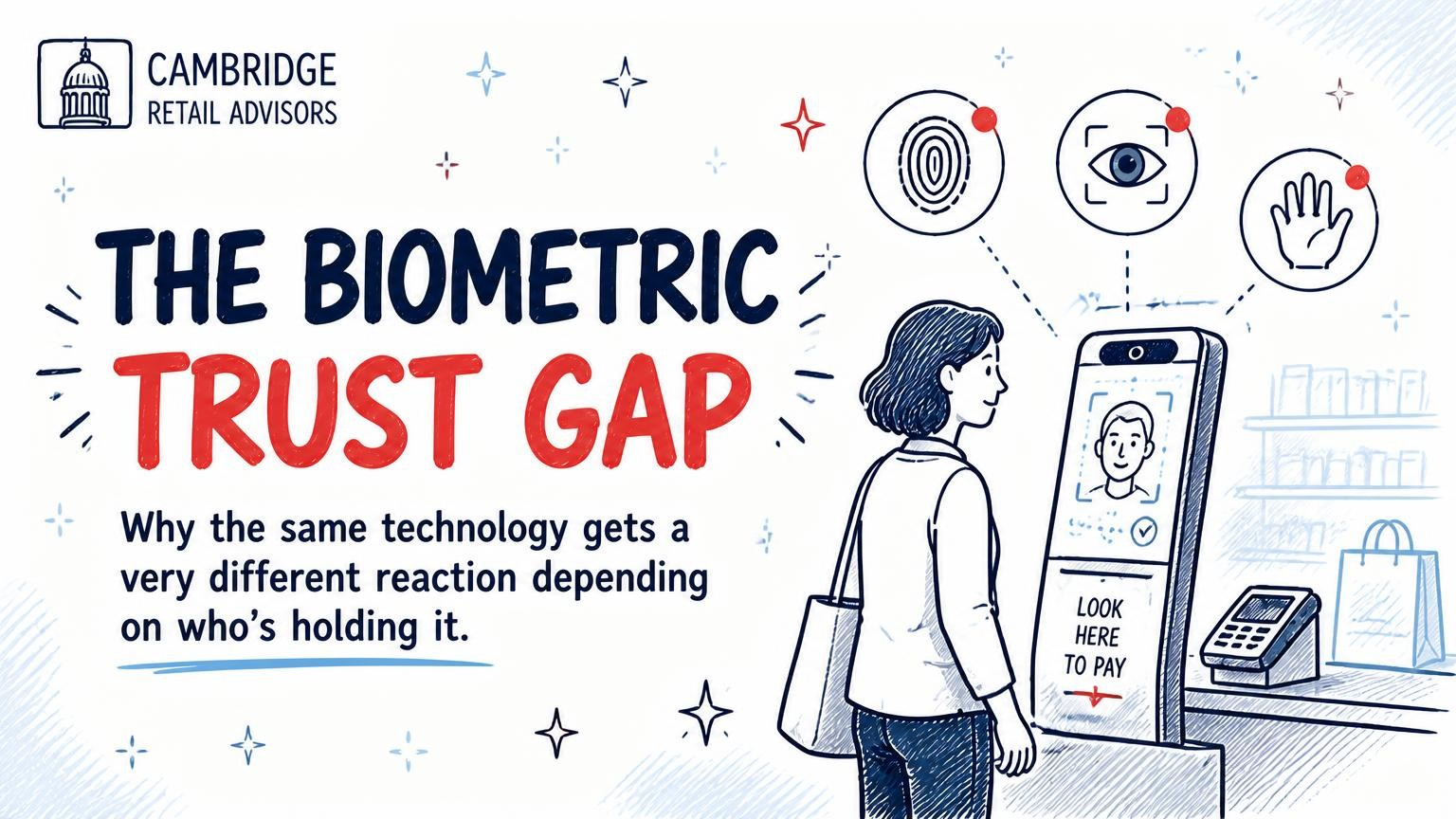
That brings us back to some pretty basic questions. The first was trust: are customers comfortable using biometrics as part of the experience? We addressed that in The Biometric Trust Gap.
The second question is the one we want to focus on here: is payment alone enough to make customers want to enroll and use biometrics?
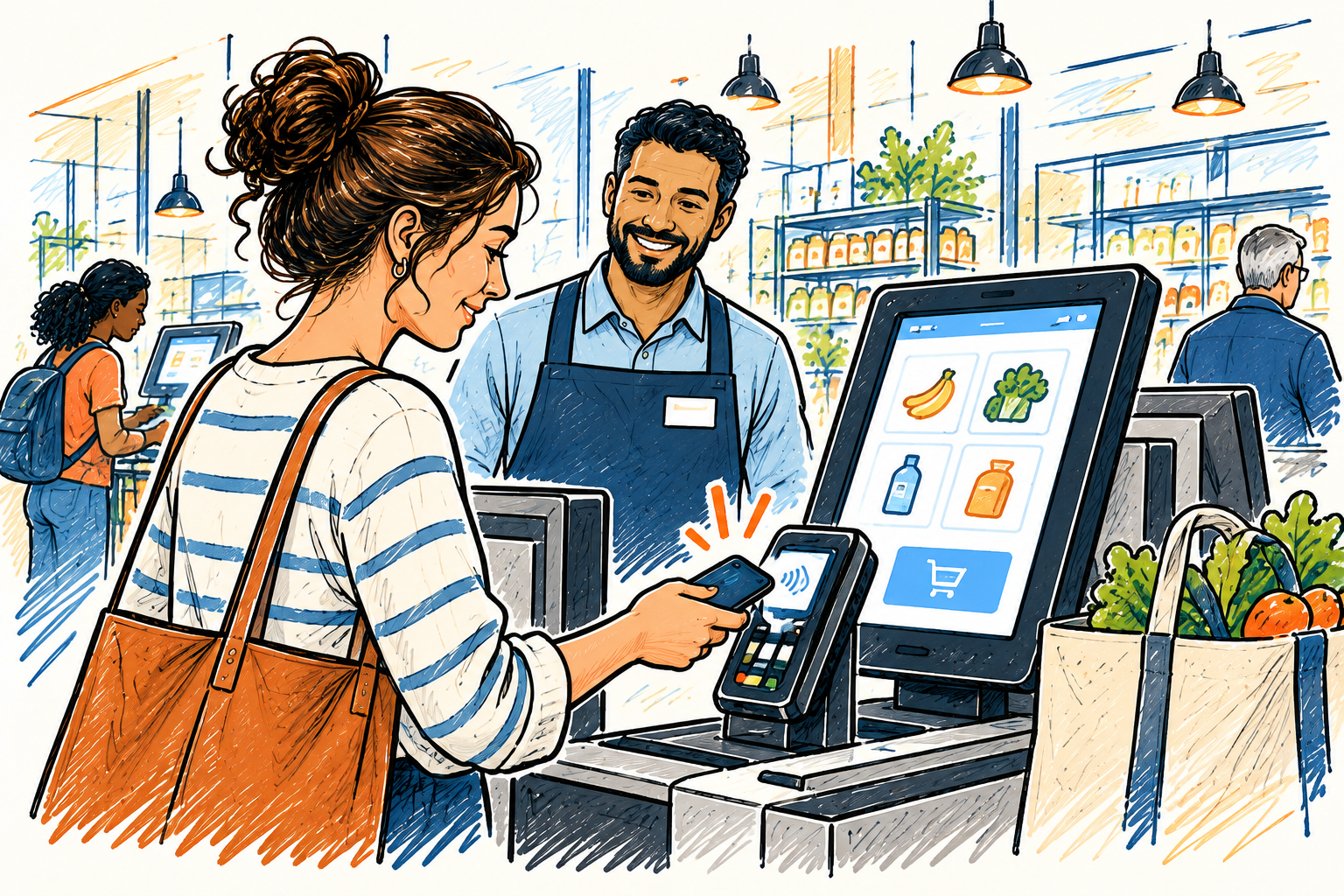
Payment is already pretty easy. Customers can tap a card, use Apple Pay or another mobile wallet, and in many cases they are already using their face or fingerprint to authenticate the payment on the device in their hand.
So if the proposition is simply replacing a card or phone tap with a palm or facial scan, how much additional value are we really creating for the customer?
That does not mean payment has no value. Speed, throughput, convenience and reducing steps all matter. But as biometrics move from testing into broader adoption, payment may end up being one piece of the value proposition rather than the thing that drives customers to enroll.
Amazon One Gives Us a Real-World Test
If you have shopped at Whole Foods over the last few years, there is a good chance you saw Amazon One sitting at the checkout. The palm reader was designed to let customers identify themselves, receive Prime benefits and complete payment.
And people did use it. Amazon rolled Amazon One out across more than 500 Whole Foods locations, and Amazon said more than 80% of shoppers who used the service at Amazon and Whole Foods locations chose to use it repeatedly.
But repeat use among people who enrolled did not translate into enough overall adoption. In January 2026, Amazon announced it was discontinuing Amazon One, with palm readers to be removed by June 3, and cited limited customer adoption.
That is what makes Whole Foods such an interesting real-world test. The technology worked, customers used it, and there were clearly customers who liked it enough to keep using it. But not enough customers saw enough reason to enroll in the first place.
Amazon One was also doing more than simply replacing a card tap. A Prime member could identify themselves for their benefits and complete payment through the same palm interaction, potentially collapsing two familiar steps — Prime identification and tender — into one.
That is real convenience. But in a routine grocery trip, collapsing two familiar steps into one may not have felt like a major change for someone who already had a phone or card in hand.
In a stadium or event environment, the equation can look very different. The customer may be moving through tickets, gates, age checks, concessions and repeated payment moments, giving biometric identity more opportunities to remove friction across the same experience.
The lesson may not be that biometric payment does not work. It may be that payment alone is not the golden ticket.
CRA’s Research Gives Us a Clue
Our checkout research with 500 consumers suggests there is real opportunity here, especially when the benefit is clear and tangible.
Consumers were especially receptive to experiences where technology did something they could immediately understand. 78.6% were comfortable with automatic discounts tied to identification, smart-cart experiences reached 68.2% comfort, and camera-based item recognition reached 67.0%.
Those questions were not specifically about biometric payments, so we should not overstate what they prove. But they do give us a useful baseline. Customers appear more receptive when technology recognizes them, applies a benefit, removes a step, or makes part of the experience easier.
As biometrics become an even bigger topic heading into NRF, that gives us a clear question for the next round of consumer research: what would actually drive someone to enroll and keep using a biometric experience?
Even that will only get us part of the way there. Over time, we will also need to understand how the answer changes by experience and by flow — where the customer is, what they are trying to do, how many steps are being removed, and what value they get in return.
That is something we can begin digging into in the next wave, using what we have already learned as the baseline.
Speed Matters — But Measure the Whole Experience
There is still real value in speed. For a brand, reducing checkout time, improving throughput and removing steps can create a meaningful operational benefit.
But that is the operations manager’s business case. The customer is evaluating something different: what does this actually do for me?
At Whole Foods, a regular Prime customer already knew the flow. Identify yourself for Prime benefits, then complete payment. Amazon One had the opportunity to combine those actions into one palm interaction and remove a step from checkout.
That is real value, but the question is whether removing that step was enough to drive broader customer adoption. And that is where the customer side of the equation becomes more interesting.
Beyond payment, what else is the biometric experience solving for them? Is it convenience, security, fewer things to carry or lose, or fewer times they have to prove who they are?
Stadiums and event environments give us a useful place to look at that question because the biometric has the opportunity to solve several of those problems during one experience.
Don’t just measure tender speed. Measure the friction you removed across the customer’s entire experience.
Stadiums Show a Different Value Proposition
Stadiums, venues and other event environments are different because the customer is inside an experience for a period of time. They enter, move through different parts of the venue, make purchases, use benefits and eventually leave.
That means the biometric does not have to prove its value one payment at a time. The value can build across the entire visit through easier entry, faster age verification, fewer physical credentials to carry, loyalty recognition, payment and fewer repeated interactions.
Think about what people actually carry into a stadium. A phone, an ID, one or more cards, maybe a wallet or purse. Throughout the event, they may have to pull those things out repeatedly for entry, age verification, loyalty and payment.
That creates friction, but it can also create a security concern. People worry about losing a wallet, dropping an ID, leaving a card behind, or having something taken in a crowded environment.
If biometric identity can establish who I am once and then help carry that identity through the experience, it starts solving several problems at the same time. The experience can become faster, easier, more hands-free and potentially more secure because the customer does not have to keep reaching for and presenting the same physical credentials.
That idea does not have to stop at stadiums. Over time, resorts, cruise ships, theme parks and other environments where a customer stays inside a brand experience for hours or days could create a similar opportunity.
The important difference is that the customer is no longer evaluating biometrics against one payment interaction. They are evaluating what it does for the whole experience from entry to exit.
Payment is still part of the answer. It just does not have to sell the whole why.
We Already Have This Model in Our Pockets
Phones may actually give us one of the clearest examples of where this can go. Face ID or fingerprint authentication did not become useful simply because it replaced typing a passcode.
The value grew as the same biometric started helping customers unlock the device, approve payments, access apps and accounts, and secure sensitive information. It began removing friction across multiple parts of the experience while also adding another layer of security.
That may be a better way to think about biometric identity across retail and hospitality as well. Payment can be part of the experience without having to be the whole reason the customer enrolls.
Maybe Payment Is a Feature, Not the Product
That may be the part of the biometric conversation we are getting backward. Payment may ultimately be one feature of biometric identity rather than the entire thing customers are adopting.
If the experience can recognize me, identify my membership, apply the benefit I am entitled to, verify my age when necessary and let me pay without making me repeat those steps, we are removing multiple points of friction. That is a stronger proposition than trying to shave another second or two off an already-fast payment.
The point is not that brands must overhaul the entire customer journey at once. It is that the initial use case needs to eliminate enough friction — payment plus age verification, entry plus concessions, or another combination that fits the experience — that the customer sees an immediate, practical return for enrolling.
And once identity starts working across an experience, the opportunity can go further. It might recognize loyalty benefits automatically, make relevant offers easier to access, or reduce the number of times a customer has to stop and identify themselves.
That does not mean every brand should try to solve everything on day one. It means payment can become one part of a broader experience rather than having to carry the entire value proposition by itself.
Trust Matters. So Does the Reason to Use It.
This connects directly back to our biometric trust research. In that survey, the card-network model produced a net positive 5-point effect on stated store choice, while the retailer-specific model produced a net negative 8.6-point effect. That tells us pretty clearly that who sits behind the biometric relationship matters.
But trust only gets us to the starting line. Customers still need a reason to enroll and keep using the experience.
Trust may get the customer to consider saying yes. The experience still has to give them a reason to do it.
That is where these two pieces connect. One asks whether the customer trusts the relationship. This one asks whether the experience delivers enough value to make that relationship worthwhile.
And as identity begins doing more across the experience, transparency and permission become even more important. Knowing who I am can create value, but the customer still needs to understand what is happening and feel that they are getting something worthwhile in return.
What Becomes Easier Once You Know Who I Am?
Before a brand asks which biometric payment technology it should deploy, there may be a more important question:
What becomes meaningfully easier, safer or better for the customer once we know who they are?
If the answer is only that they no longer have to tap a card, that may not be enough. If the answer becomes that they no longer have to repeatedly identify themselves, show an ID, find a loyalty barcode, verify eligibility and then separately pay, the equation starts looking very different.
And if that identity can also recognize benefits, reduce unnecessary prompts, improve security or remove other repeated interactions, the value proposition changes again.
Biometric payment can absolutely remove friction. But the bigger opportunity may come when biometric identity removes multiple pieces of friction — and adds value — across the entire experience.
That is what we want to understand next: if payment is only one piece, what combination of benefits actually gives customers a reason to enroll?
THE LENS
The three-page version for your next meeting.
The key numbers, three things to try, and the question to ask your team. Free PDF. No form.
Get The Lens