01
Understand the network
Map inventory, systems, labor and handoffs from receiving through fulfillment so the real constraints are visible.


Heading to NRF ’27? Let’s connect and talk about your retail priorities.
Let's Connect at NRF
From the DC to the shelf to the doorstep — inventory, systems, labor, and the handoffs between them. Fewer surprises, fewer fire drills.
Retail supply chains cross distribution centers, transportation, inventory systems, stores, fulfillment teams and customer promises. A problem in one part of the network quickly becomes a problem somewhere else.
The work is to see the full flow, identify where capacity or information breaks down, and design the operating model around the service level the business actually needs.
Receiving, storage, picking, packing, staging and outbound movement are connected. Looking at the whole path makes it easier to find the real constraint instead of optimizing one step in isolation.
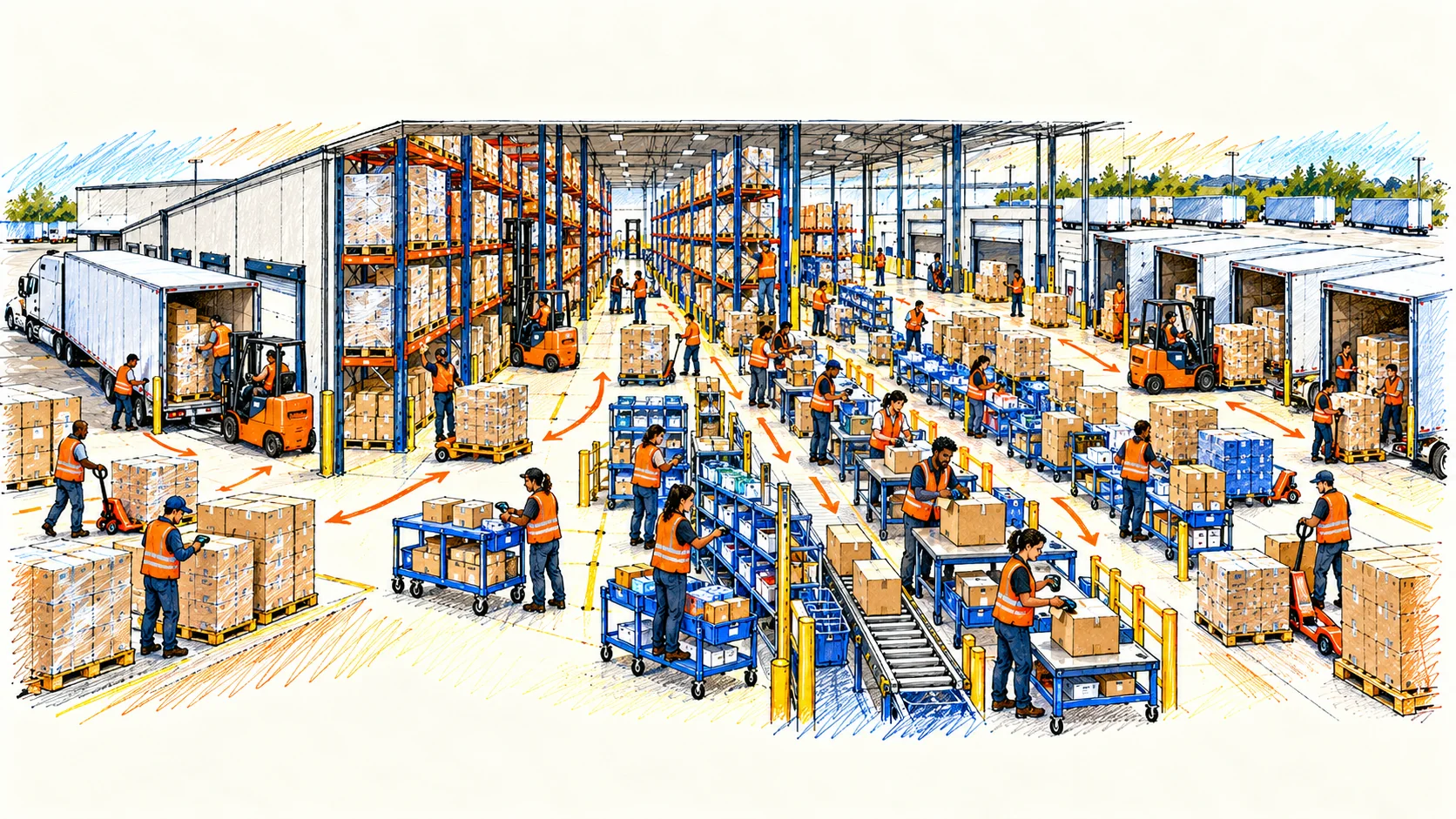
The goal is a network that can move inventory with fewer surprises, better visibility and enough flexibility to support growth.
Map inventory, systems, labor and handoffs from receiving through fulfillment so the real constraints are visible.
Focus automation, process and technology changes where they improve throughput, accuracy or service.
Test labor, throughput, inventory flow and service levels against peak demand, channel growth and disruption.
Four places the network slows down — or where there’s room to run faster. Here’s where the work lands.
Where inventory sits, who moves it, and what it costs to get it out the door — decided together, not one DC at a time.
✓ Network design and capacity planning
✓ Distribution center operations and flow
✓ Inventory positioning and allocation
✓ Labor, throughput and service-level tradeoffs
✓ Fulfillment roadmap and implementation priorities
The system should match how the building actually runs, not the other way around.
✓ Current-state workflow and requirements
✓ WMS selection and fit-gap analysis
✓ Inventory, location and process design
✓ ERP, OMS and automation integration needs
✓ Implementation, testing and rollout planning
Tag it where knowing exactly what’s on hand changes a decision. Skip it where it doesn’t.
✓ RFID use-case and value assessment
✓ Inventory accuracy and visibility requirements
✓ Tagging, reader and infrastructure considerations
✓ System and data integration needs
✓ Pilot design, rollout and adoption planning
Robots and conveyors where they clear a bottleneck, not where they look good on a tour.
✓ Automation opportunity assessment
✓ Material handling and robotics use cases
✓ Process, labor and throughput analysis
✓ Business case and operating impact
✓ Implementation sequencing and scale roadmap

For a home furnishings retailer, CRA set the future-state requirements, built the business case, guided TMS and WMS selection and implementation, and kept internal and vendor teams moving together.
If inventory is getting stuck between systems, facilities, channels or teams, start by fixing the flow instead of another isolated piece.
Discuss Your Supply Chain →