

The Business Challenge
A store can have the item in the building and still lose the sale. It can make a return easy and watch shipping and handling eat up the margin. It can get the refund done in minutes and leave the item sitting in the back until it has to be marked down. All three can happen on the same shift.
Inventory — The item is here and we still can’t sell it
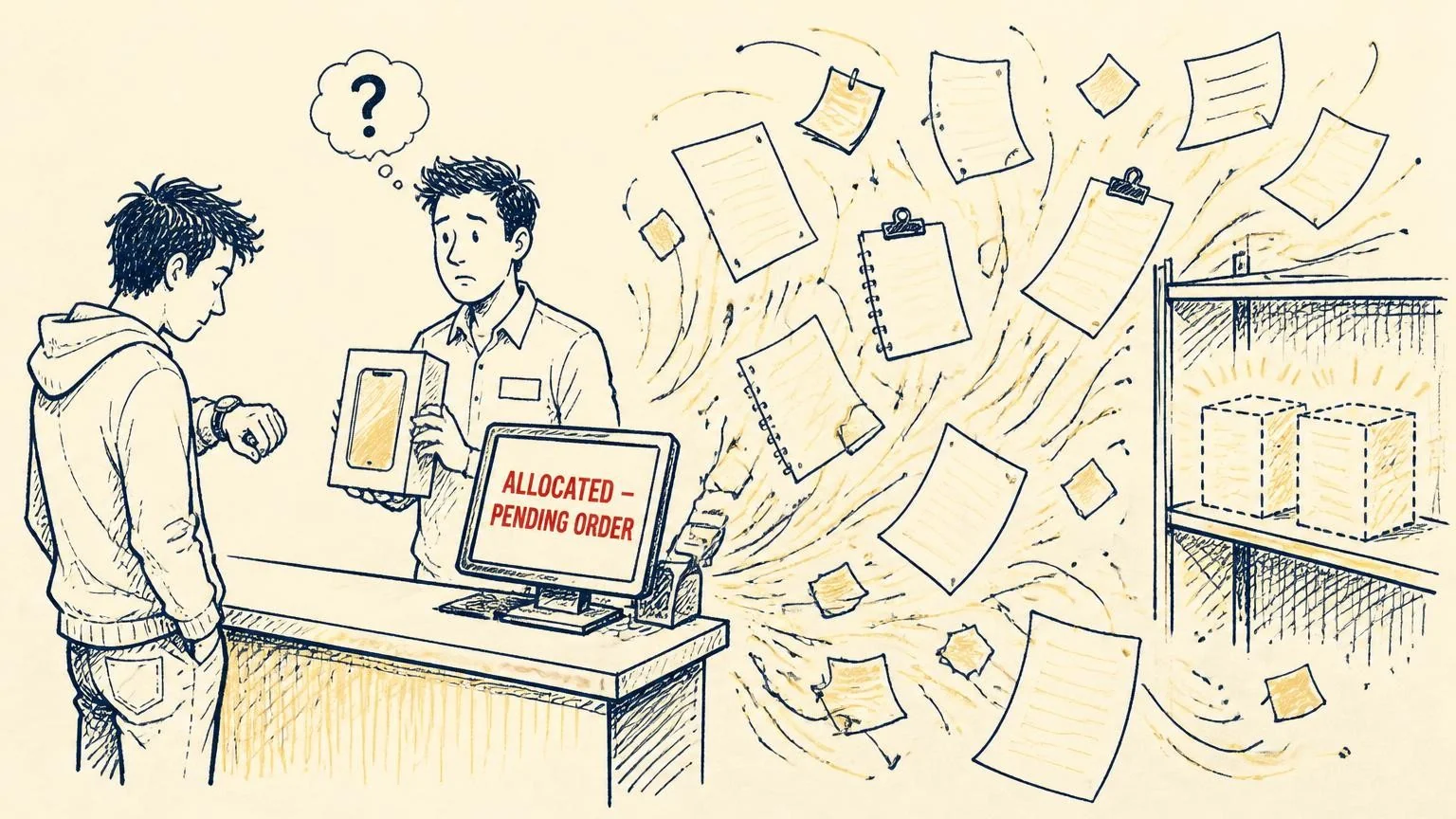
CRA partner Joseph Romain remembers what that looked like at the register.
When I was managing a Verizon store, I could have the customer right in front of me and the phone in my hand. I’d ring it up, and the register wouldn’t let me sell it. The phone was allocated to a pending order. Now I’m asking around to see whether the customer is coming back, and the person who wants to buy it is still standing there.
Do you chase it down or make a quick adjustment and tell yourself you’ll clean it up later? Release a hold someone is counting on and you’ve broken a promise. If that adjustment gets forgotten or never finished, it can affect what gets reordered or allocated next.
The same store might have two boxes in the back that haven’t been received and the last few units of another item sitting in shoppers’ carts. The associate, the website, the warehouse, and now an AI agent can all tell someone, “Yep, we’ve got it.” How sure are they that it’ll actually be there?
Returns — Who pays to make it easy?
Order 12 things, keep two, send 10 back. The brand sold two items and still has to pay to get the other 10 back and check them. Pass some of that cost to the customer, and you might save on this return and lose their next order.
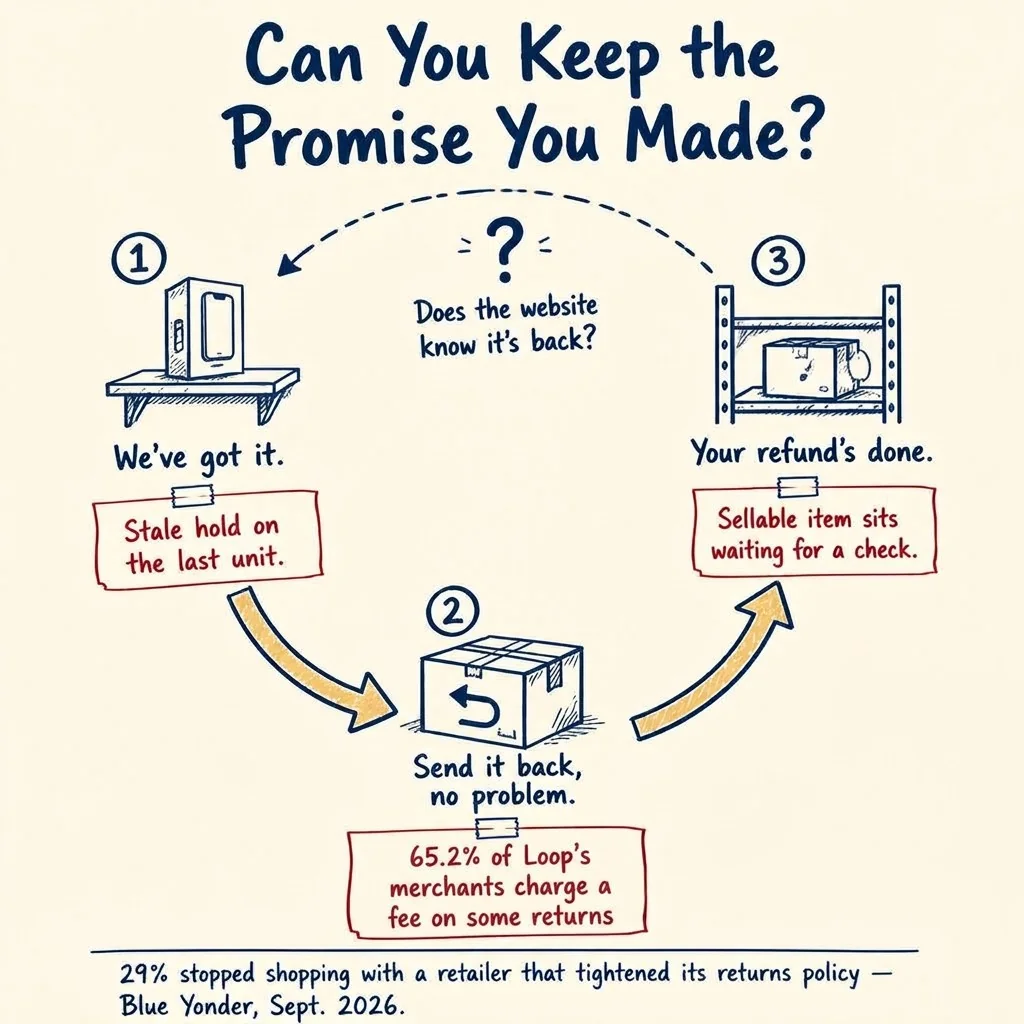
In a September 2026 Blue Yonder survey of 2,000 U.S. consumers, 29% said they’d stopped shopping with a retailer after it tightened its returns policy in the past year.
Reverse Logistics — Every extra day or handling step costs something
The refund can be done while the item is still sitting behind the counter. Someone has to check that it’s the right item, see if all the parts are there, and decide whether it can go back on the shelf. Send it to the warehouse for another inspection and you’ve added freight and labor. Wait too long and you can miss the chance to sell it at full price. Put an incomplete item back on the shelf and you might get to do the whole thing twice.
What’s Changing
Inventory — Better counts help brands keep their promises
A manual count tells us what was there when somebody counted it. RFID, computer vision, and connected inventory systems can give brands a more current picture as items are received, sold, or reserved. An agent could flag a suspended order that’s still tying up the last unit so someone can check whether the hold is still valid.
Customers have always wanted the item to be there. A pickup confirmation turns that expectation into a specific promise. “I reserved it. I’m coming to get it.” They may have already stopped shopping around or planned their day around that pickup.
We said we had it. Did we keep the promise?
Returns — Brands are putting guardrails around a benefit that earned loyalty
Easy returns gave people confidence to shop online, especially during COVID. Brands helped build that habit. Now they have to decide how much of it they can afford to keep paying for. Shipping costs money, and a return brought into the store still takes somebody’s time to receive and check.
In Loop’s data from more than 4,000 Shopify merchants using its returns portal, 65.2% charged a fee on at least some returns. That changes the decision at the kitchen table. “Is it worth mailing this back, or would I rather take it to the store and see what else they have?” Whether it’s a mail fee, a restocking fee, or free returns as a loyalty benefit, the brand has to weigh what it saves on this return against whether the customer comes back for the next order.
Reverse Logistics — Make the resale decision sooner
Once the item comes back, the customer can get their refund while a sellable item sits on a return shelf. An associate may have a customer who wants it, and the website may still say it’s out of stock. Put it back into available inventory before someone checks it, though, and the brand could promise an item that’s damaged or missing a part.
What’s changing is where and how soon that call can happen. If the team at the return counter or a regional hub can verify the item and its condition, some merchandise can go straight back into stock or be offered as open-box. Items that need a closer look can go to a specialist.
What We’re Watching at NRF ’27
The Revitalized Physical Store, January 10, features Wegmans and Grupo Boticário. How does the store handle pickup and returns while still giving people a reason to shop there?
The Agentic Retail Enterprise, also January 10, on the AI Stage. What does an agent do when it’s about to promise the last unit and the record is stale?
A New Lens on the Business Value of Product Philanthropy, January 10, brings together Good360, JCPenney, and Macy’s. What did it take for store teams to collect the jewelry from JCPenney’s Valentine’s Day Ex-Change and get it to their donation partner?
Supply Chain Sunday, January 10 at Lavan Midtown, requires separate registration. When the return counter backs up and online orders still need to go out, how do stores and warehouses divide the work?
The State of Retail Returns, January 11, with NRF and ReturnPro. When brands change their policies, do fewer items come back, or do returns move to a different channel?
A Few Companies Worth Exploring
- Manhattan Associates (Booth 5438, Level 3) — Order management, store inventory, and fulfillment on one platform. Built so the store, website, and warehouse can work from the same view of what’s available to promise.
- Avery Dennison (Booth 5921, Level 3) — RFID tags and item-level data. Useful for seeing what’s actually on the shelf and in the back, and following an item from receiving through resale.
- Zebra Technologies (Booth 3303, Level 3) — RFID readers, mobile computers, and frontline AI tools. Puts stock lookups and discrepancy fixes in the associate’s hand, right on the floor.
- Made4net (Booth 1652, Level 1) — Warehouse management and omnichannel fulfillment. Keeps the warehouse and stores in step as orders, transfers, and returns move between them.
- Loop (Booth 1342, Level 1) — Returns and exchanges for online brands. Gives brands ways to steer returns toward exchanges and store credit while keeping the process easy for shoppers.
- Reverse Logistics Pavilion — Returns, refurbishment, resale, and recovery providers in one place on the Expo floor. A good stop for working out where a returned item should go next.
These are companies worth investigating, not endorsements.
What We Want to Investigate — What Happens on a Busy Saturday?
One associate is picking an online order, someone is waiting with a return, and a shopper on the floor needs help. Who decides what comes first? That’s the situation we want vendors and operators to walk us through at Javits.
Inventory — Can teams trust the fix?
Say an associate is in a rush to check in 20 units because a customer wants to buy one. Who verified all 20 were there? If an agent flags an old hold, who checks whether somebody is still counting on that item before releasing it?
Show us what happens when the information is wrong. Who owns the fix, and how soon can the next associate, the website, and the warehouse rely on it?
Returns — What could make the visit worth coming in for?
Heck, could you have a return party? Come in for a quick refund, or take a little extra in store credit and see what just came in. Bring something you’ve had in your closet for years for resale, or donate usable items a local nonprofit needs. Athleta and ThredUp show how eligible clothes that sell can earn store credit. Through Good Together, Publix gives food banks and other nonprofits food that’s still safe to eat. Could a local food vendor join the event, or could a restaurant partner offer a little toward dinner after someone finds the right outfit?
We’d look at who stays to shop, who comes back later, and what the event costs the store and its partners. Then we’d ask what the store could keep doing on a regular Saturday, when someone just wants their refund and another customer needs help finding something that fits.
Reverse Logistics — Can the returned item help make the next sale?
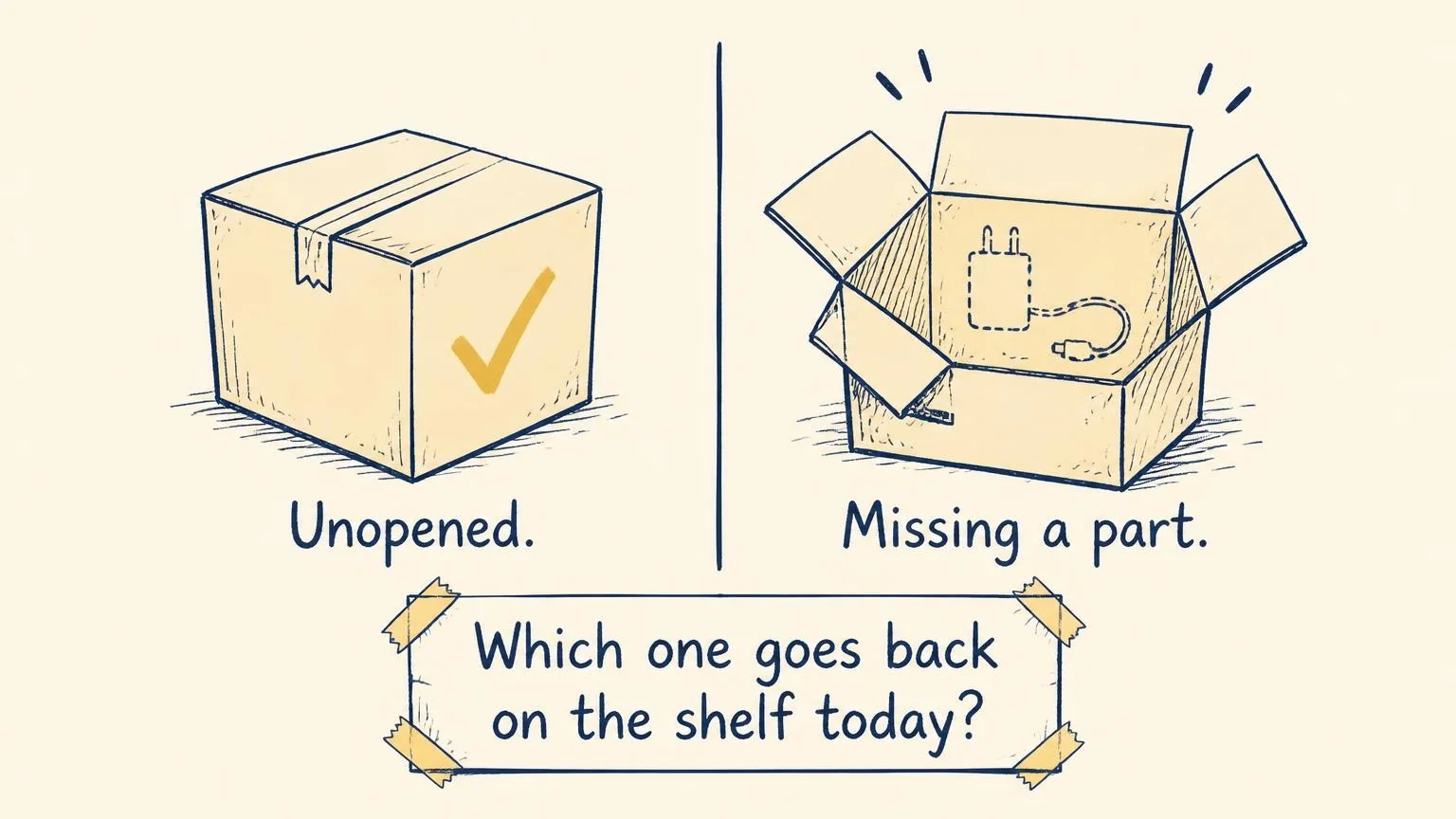
Give the store, the regional hub, and the warehouse the same two returns. One is unopened. The other is missing a part. Which can the store verify, grade, and release today? Which needs a specialist, and who owns it after the handoff? We’d compare how long each route takes, how many times somebody handles the item, and what value is left after labor, shipping, and markdowns.
Then picture somebody getting ready for a date. The associate who helped them sees that the item they were eyeing just came back in sellable condition. “Hey, I’ve got one that’s 20% cheaper, and I can get it to you in time. Want it?” The store gets another shot at a sale. The customer gets something they wanted at a price that works.
Questions to Bring Back
Inventory
- What can each channel confidently promise right now?
- Who verifies a receipt or checks whether a hold is still valid?
- Who gets the last unit when a walk-in, a pickup, and a shipment all need it?
Returns
- What happens to returns, exchanges, and repeat visits when we change the policy?
- Can a shopper finish an exchange without paying for the replacement before the refund comes through?
- How can we help customers bring things back in good shape?
Reverse Logistics
- What can the store grade and resell today, and who owns what goes to a hub?
- Can an associate find the next customer for an open-box item?
- Once an item is cleared for resale, how long before a customer can see it and buy it online?
The Road Ahead — Can We Make the Next Promise?
Think back to the phone at the Verizon register. Say the associate checks the order and frees up that unit. Or a team verifies a return, grades it, and puts it back on the shelf. The store knows the item is available. What does the next customer see when they check the website?
That’s where we’ll pick up in Article 7.
THE LENS
The short version for your next meeting.
The key points, what to try, and the question to ask your team. Free PDF. No form.
Get The Lens