

Validation isn't new. People have always looked to others before making decisions. We asked friends what they thought of an outfit. We brought family members shopping. We looked to coworkers, neighbors, and communities for recommendations and reassurance. Sometimes it was as simple as having someone standing next to you saying, “Yeah, I like that one better.”
For generations, those opinions shaped what we bought, where we went, and how confident we felt walking out the door. The catch? It was limited to whoever happened to be in your orbit.
That's changed — and pretty dramatically.
People Want Proof From Someone Like Them
Here's what's actually going on beneath all of this: people aren't just asking whether a product is right for them. They're asking whether it worked for someone like them. That's a different question entirely.
Think about how people research a cruise today. The brand gives you gorgeous photos, detailed itineraries, room specs, all of it. And people look at that stuff. But then they go to YouTube and watch someone's cabin walkthrough filmed on an iPhone. They dig through Instagram for guest photos that weren't staged by a marketing team. They find a forum thread from a stranger who took the same sailing and had opinions about the buffet.
They're not looking for more information. They're looking for proof that what the brand is promising is actually what shows up.
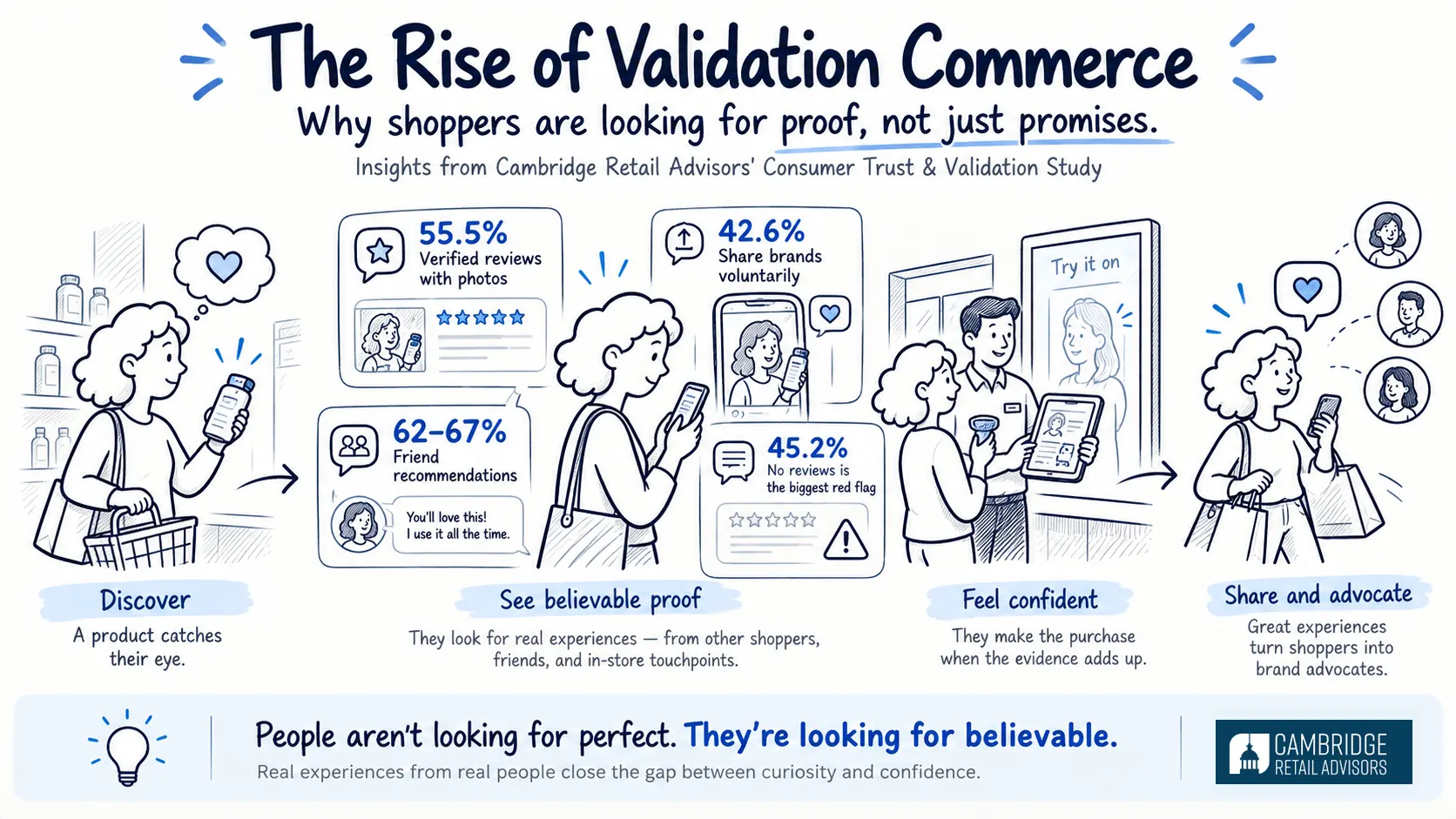
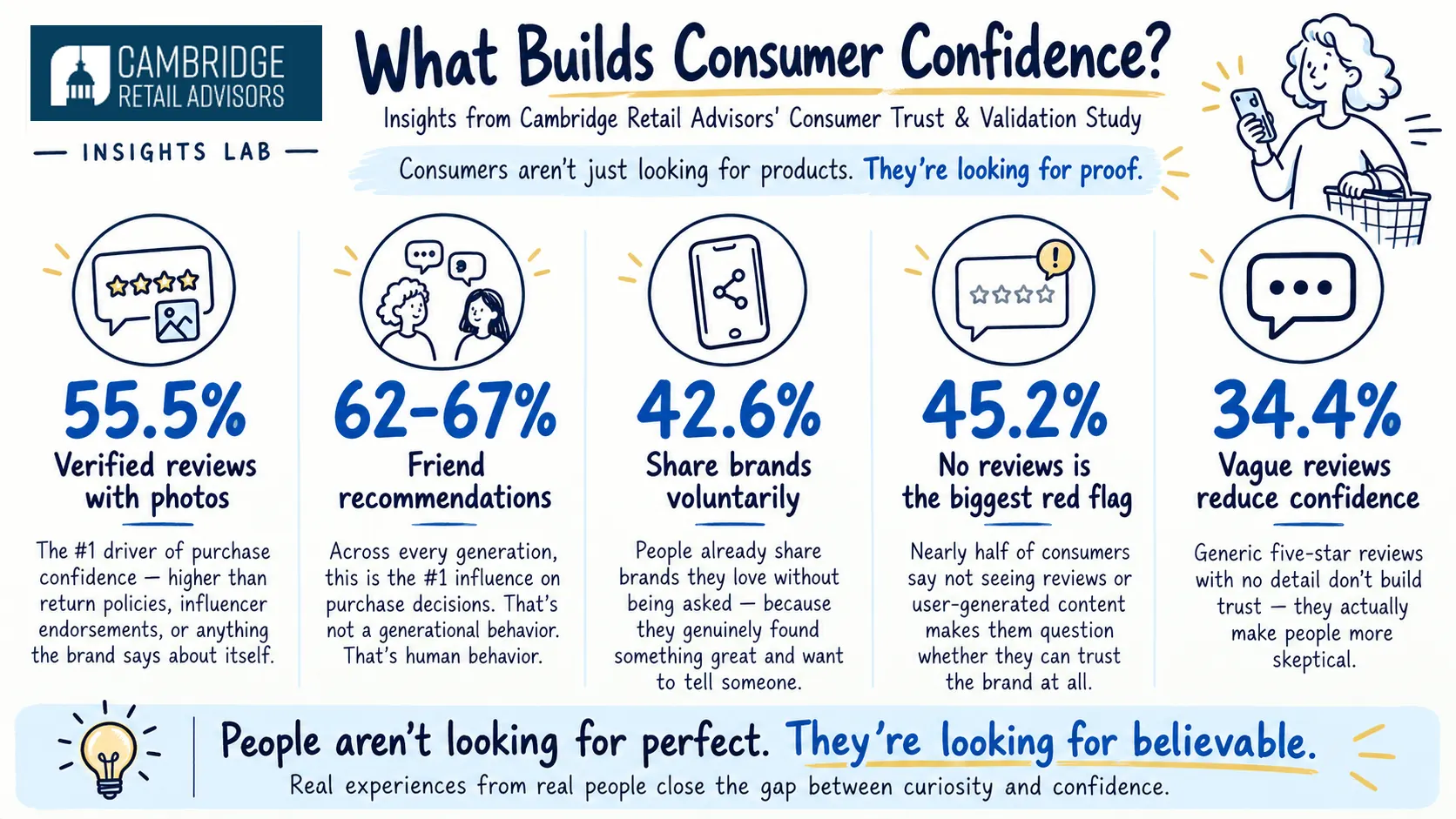
Our Cambridge Retail Advisors Consumer Trust & Validation Study puts numbers to this. Verified reviews with photos were the strongest driver of purchase confidence, at 55.5%. Friend recommendations were the leading influence on purchase decisions across generations, ranging from 62% to 67%.
People aren't looking for perfect. They're looking for believable.
What Breaks Confidence Matters, Too
There's another side to this story. In our study, 45.2% identified the absence of reviews or user-generated content as their biggest red flag, while 34.4% said vague reviews reduced their confidence.
A generic five-star review and a believable customer experience aren't the same thing. “Great product!” doesn't tell someone much. A customer explaining what worked, what didn't, and why they'd buy it again can be a lot more useful when you're trying to decide.
Connecting Recommendations to Proof
Here's the frustrating part — the validation is already out there. Reviews are sitting on product pages. Videos are on YouTube. Recommendations are buried in group chats, Reddit threads, and Facebook groups you'd only find if you knew exactly where to look. The confidence people are searching for exists. It's just scattered everywhere and hard to surface at the right moment.
That's where AI starts to get genuinely interesting.
Not because it can recommend products — we've had that for years. But because it can start connecting recommendations to actual proof. Reviews from people with similar preferences. Photos from customers who've already been there. Firsthand accounts from someone trying to solve the exact same problem you are.
The recommendation and the confidence arrive together. That's something personalization alone never really cracked. Not just smarter recommendations. A smarter confidence layer.
Validation Moves Into the Real World
This doesn't stay online, either.
Smart mirrors, store associates with the right tools, and digital displays could surface real customer experiences at the exact moment someone is standing in front of a product trying to decide. The goal isn't just bringing reviews into a store. It's bringing confidence into that moment of hesitation.
But the bigger opportunity isn't only helping people find validation. It's helping them create it.
Every event, pop-up, store experience, and brand activation gives people something they might want to talk about. Every photo a customer takes, every review they leave, every recommendation they share can become part of the confidence layer for the next person.
And people are already willing to do it. Our study found that 42.6% of consumers share brands they love without anyone asking them to. They do it because they found something worth talking about. The brands that figure out how to give people real reasons to participate, rather than simply asking for five-star reviews, are going to build something that compounds over time.
The Crowd Is Already Talking
None of this is really about technology. Technology is what made it scalable.
People have always trusted other people's real experiences. What's different now is that those people don't have to be someone you know. They can be thousands of strangers who've already done the thing you're considering and have thoughts about it.
The brands that get this right won't treat reviews and community content as a marketing tactic. They'll treat it as infrastructure — the foundation that helps future customers feel confident enough to commit.
The crowd is already talking. The only question is whether you're making it easy for the next customer to hear them.
THE LENS
The three-page version for your next meeting.
The key numbers, three things to try, and the question to ask your team. Free PDF. No form.
Get The Lens