

The Business Challenge
The Role of the Physical Store Is Expanding
Stores have traditionally been places where a shopper would browse, select, and make their purchase. That responsibility hasn't disappeared, but retailers and brands now have more opportunities to engage customers before, during, and after the transaction. A store visit might involve trying a product, speaking with a specialist, attending a workshop, personalizing a purchase, enjoying entertainment, or connecting with a community.
“Connected” works two ways here. Digital tools connect the store to the shopper: what they're shopping for, what they've purchased, and how they're engaging with the store. Events, services, food, and community connect the shopper to something worth coming back for. The right mix depends on the retailer, its customers, and its business model. Sometimes the experience itself becomes the reason to visit. Other times, customers simply want to get what they need and leave.
The challenge isn't turning every store into an entertainment destination. It's understanding what kind of experience makes sense for the customer, the brand, the shopping occasion, and the location. That also means delivering a recognizable brand experience across different store formats. A flagship and a neighborhood store won't offer the same level of interaction, but both should feel like the same brand. There should be room for local character without losing consistency.
And whatever a retailer builds, store teams need to be able to run it, fix it, and keep it fresh.
That raises a bigger question we'll come back to. If a store drives online sales, community, and relationships well beyond its four walls, should we still judge it, and pay its people, mainly by what rings up at the register?
Business Questions Behind the Change
- How do physical locations create value that complements digital commerce?
- What gives customers reasons to visit, engage, and return?
- Where does technology make the people and the experience better, and where is it just a screen nobody touches?
- How do brands build stronger relationships through direct experiences, including when they sell through other retailers?
- How do retailers keep the brand consistent across store formats while leaving room for local relevance?
- What does it take to run and maintain these experiences across a whole network, not just one store?
What's Changing
Experiential retail isn't new. Remember the shopping experience in Pretty Woman? The outfits being brought out, the personal attention, even the pizza. Everyone knew a purchase was coming, but the associates turned the shopping trip into an experience. No interactive displays, sensors, or AI required.
Department stores had restaurants and gathering spaces generations ago. Cracker Barrel built its identity around food, nostalgia, and the country store. Tommy Bahama has spent decades combining retail and hospitality to give customers that relaxed, tropical feeling. What's changing isn't the idea of creating experiences. It's how much more retailers can do with them today, and how digital has changed what customers are accustomed to.
Interactive and Personalized Experiences
Think about what digital has done to our expectations. We're used to having information and choices at our fingertips, and those expectations don't disappear when we walk into a physical store.
At PUMA, an interactive wall developed by Outform responds when someone picks up a shoe, displaying information about that particular product. These aren't just ways to entertain customers. They help people understand products, discover what works for them, and make better purchase decisions.
They're also opportunities to communicate the brand's why. Rather than simply telling customers what the brand stands for, retailers can let them experience it. Apple uses hands-on demonstrations and workshops to help customers understand what they can do with its technology.
Immersive Experiences, Hospitality, and Destinations
Disney and Universal have understood the power of experiences for years, and you see the same thing at concerts and sporting events: merchandise becomes something to take home to remember it.
LEGO is a great example of bringing that thinking into retail. Walk into one of its stores and you're encouraged to build, play, explore, and interact with the products. LEGO also adapts the experience across different formats. A flagship may feature elaborate builds and immersive digital installations, while a typical mall store offers hands-on activities, Pick a Brick walls, and mini-figure customization. Even compact airport locations can carry elements of that experience for customers who may only have a few minutes.
The experience isn't identical, but it's recognizably LEGO. Creativity, imagination, and play remain at the center, regardless of the store's size.
Foodservice, demonstrations, personalized services, workshops, and even the design of the store itself can create experiences that fit the brand. The opportunity is finding the right combination for the customer, the location, and the shopping occasion.
Community, Events, and Experiences Beyond the Walls
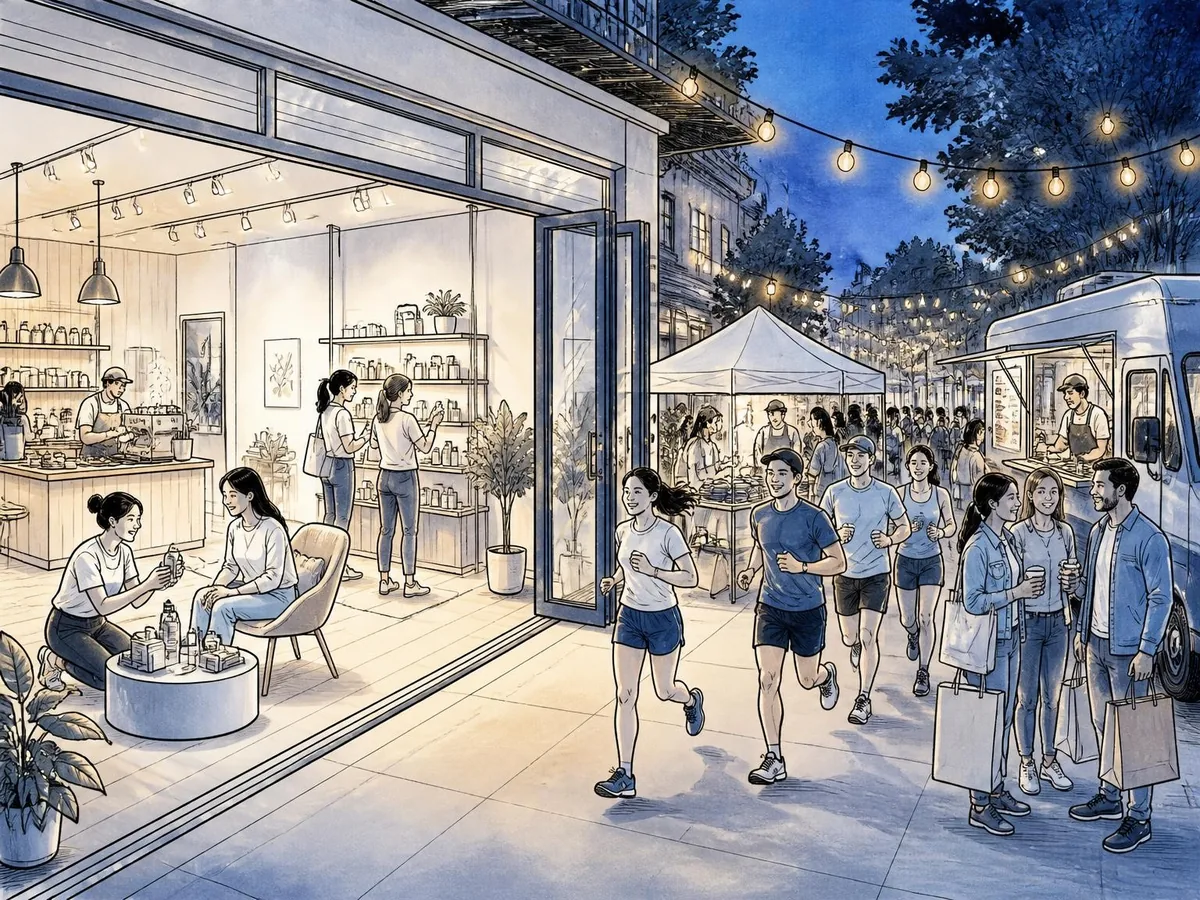
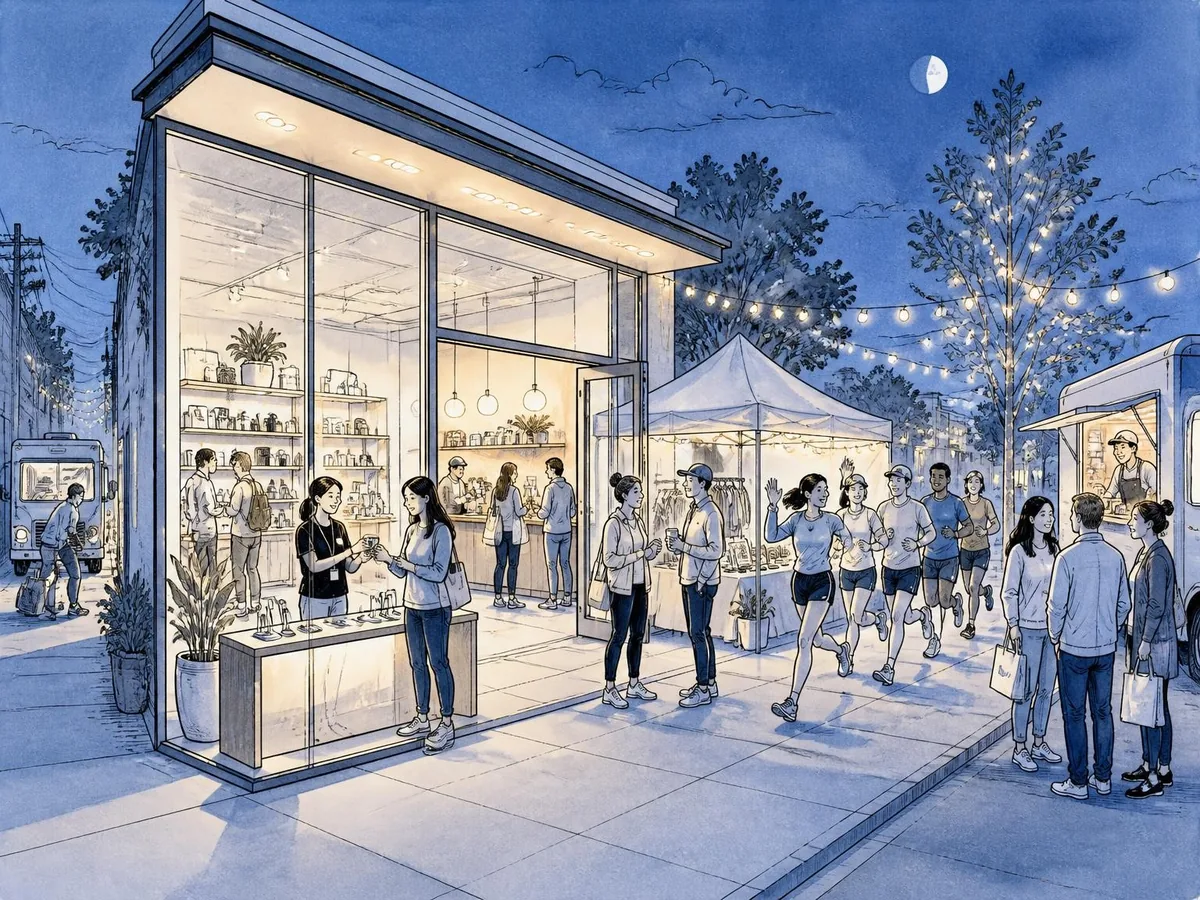
There's another part of experiential retail that's becoming increasingly important: the connection to local communities. Fleet Feet brings people together through group runs and training programs. Nike has used fitness classes and community events to connect with customers around shared interests. Grocery retailers offer cooking classes, tastings, and other activities that give customers reasons to visit beyond their regular shopping trips.
These experiences don't have to happen inside the store. Festivals, pop-ups, sponsorships, local events, and partnerships allow retailers to connect with people where they're already spending time.
More Tools, More Possibilities — and More Choices
Retailers also have more technology available to create these experiences than ever before. AR, VR, interactive displays, digital media, mobile devices, AI, and connected store systems are opening up new ways to support discovery, personalization, entertainment, and service. And these capabilities aren't necessarily limited to large flagships. A smaller location might use a customer's own device, a single interactive display, or a connected service instead of an elaborate installation.
The temptation is to add every new capability. Screens, sensors, digital content, personalized offers, and AI can all be useful, but put too much together and a store can start to feel like Times Square or the Las Vegas Strip. The opportunity isn't to use everything available. It's to bring together the right mix of technology, people, services, entertainment, and community to create an experience customers actually want.
What We're Watching at NRF
Three sessions at NRF ’27 have caught our attention, each approaching experiential retail from a different perspective. Together, they look at how brands create experiences, how technology can support them, and what it takes to make them work in everyday retail operations.

What If Retail Becomes Entertainment First, Commerce Second? brings together Victoria's Secret, Gap, and PepsiCo, three brands looking at customer engagement in different ways. Victoria's Secret has been moving past its old image toward a more inclusive, welcoming brand built around confidence and personal connection. Gap, once a defining cultural brand, is finding new ways to reconnect with customers through partnerships, music, and culture. PepsiCo brings another interesting perspective because it largely depends on retail and hospitality partners to bring its products to consumers. Think about how Pepsi Spire has made something as ordinary as choosing a fountain drink into an interactive experience.
What interests us is how these experiences strengthen the relationship between customers and brands. They also introduce questions about space, staffing, partnerships, and the investment required to keep experiences fresh. A customer might participate in an event today and make a purchase weeks later. That value matters, even if it isn't always easy to measure at the register.
The Next Era of Digital Retail: From Connected Stores to Adaptive Experiences, featuring Sephora and Outform, explores another side of the opportunity. Sephora already connects with customers through Beauty Insider, its mobile app, product expertise, and in-store consultation. Their ongoing pilot looks at how connected displays, digital content, and physical product interaction could make discovery more personalized and useful. But the experience has to hold up under everyday store conditions, work alongside employees, and deliver something customers actually value.
We're also interested in where AI might take these experiences. It could eventually help associates provide more informed service while giving customers new ways to explore products through personal shopping assistants.
Of course, here's one of those NRF moments when you wish you could clone yourself. Both sessions are scheduled for Sunday, January 10, at 11:30 AM. Two conversations we'd really like to hear, happening at exactly the same time.
Earlier that morning, The Revitalized Physical Store: Enhanced Experience, Hub Function, Customer Acquisition, Powered by AI brings Wegmans and Grupo Boticário together. Wegmans has long made shopping an experience through its specialty food departments, bakeries, prepared foods, and knowledgeable employees. But those stores also have to accommodate digital fulfillment, pickup, and delivery without disrupting the experience for customers shopping in person. We've all seen the large picking carts moving through crowded aisles at big-box stores. That's part of today's retail reality.
Grupo Boticário adds an important franchise perspective. Delivering personalized beauty consultations, product discovery, and recommendations across a large network requires more than a good store design. The brand experience needs to remain recognizable across different locations, formats, and ownership models.
What we're interested in is how retailers balance all these responsibilities. Can stores serve as fulfillment hubs, customer acquisition channels, and experiential destinations without compromising the shopping experience? And can stronger relationships, community engagement, and repeat visits help justify the investment?
A Few Companies Worth Exploring
Once you start thinking about these possibilities, it's easy to get your experiential retail juices flowing. A few companies worth exploring at NRF and beyond:
Outform (Booth 6609) is working at the intersection of physical products, interactive merchandising, and digital experiences. Creative Realities (Booth 2201) brings digital content, signage, and interactive experiences into retail environments, including the challenge of managing those experiences across large store networks. VusionGroup (Booth 4839) approaches things from the shelf, connecting pricing, product information, shopper guidance, and retail media.
RetailNext (Booth 4647) brings an important measurement perspective, helping retailers understand customer traffic, movement, and engagement within stores. ASTOUND Group (Booth TBD) takes us beyond traditional retail spaces through immersive environments, pop-ups, brand activations, and live experiences. Even if they're not exhibiting, they're a company worth earmarking for further exploration.
Each approaches the opportunity differently, which is exactly why they're interesting. The question isn't how many new technologies or experiences a retailer can introduce. It's which ones make sense for the customer, fit the brand, and can be supported across the business.
What We Want to Investigate
Business Value and Different Store Formats
When we look at experiential retail, the business case has to go beyond saving money or increasing sales. Those are still important, but we also need to understand what the customer and employee are getting out of the investment. Does it make shopping easier, more enjoyable, or more personal? Does it free employees from routine work and give them opportunities to do something more fulfilling? And can the retailer build stronger customer relationships that lead to additional sales and repeat visits?
There's also the short-term versus long-term investment to consider. What can a retailer accomplish today with the people, technology, and locations it already has? What requires a larger investment as part of its store-of-the-future strategy? The right approach will depend on the brand, its customers, and its business model.
Store formats play a major role as well. A flagship in Manhattan, a destination location at Disney Springs, or a store at The Forum Shops at Caesars Palace may offer a much more elaborate experience than a small Main Street location. But the brand's culture, customer service, and overall experience should still be recognizable. Where a smaller store lacks space or technology, local events and community partnerships may provide other ways to connect with customers.
Employees and the Changing Operating Model
As technology takes on more of the routine work, from pricing updates and inventory checks to certain checkout tasks, there's an opportunity to rethink how employees spend their time. Yes, they'll still be stocking shelves, supporting transactions, and handling everyday operations. But they could also become product specialists, event coordinators, hospitality hosts, and brand ambassadors. Think about Disney cast members. They're not simply there to complete a task; they're part of delivering the experience. In some ways, technology could help bring back some of the attention that once came from a knowledgeable salesperson, only with better information and more ways to engage.
But are we training and compensating people for these expanding responsibilities? And are we still measuring store performance primarily through register sales when employees may be helping drive customer relationships and digital sales throughout their market? ICSC research found that opening a store lifts online sales in its surrounding trade area by 6.9% on average, while closing one drops them 11.5%. If stores contribute to business well beyond their four walls, should that change how we evaluate the location, its management team, and the associates who contribute to that growth?
The operating model may need to evolve along with the experience, including how fulfillment activities coexist with customers shopping in the store.
Partnerships and Experiences Beyond the Store
There's also the question of how much of the experience retailers need to own. A retailer doesn't necessarily need to build a café, operate its own foodservice business, or organize every event. Could five or six businesses along Main Street come together for a shared event, creating something more engaging than any one store could provide on its own? Could retailers work with local restaurants, food trucks, community organizations, or emerging brands to introduce experiences they wouldn't otherwise be able to offer? A flagship may have the facilities to host a large event, while a neighborhood store could join an existing community activity or bring in a local partner.
I also wonder whether stores could become a platform for smaller businesses, giving local entrepreneurs opportunities to showcase their products and engage customers. Not unlike how Amazon Marketplace gives businesses access to a broader customer base, although the physical retail model would certainly be different.
These partnerships could help smaller locations extend their experiences beyond their four walls while building stronger connections within the community.
Technology, Personalization, and Local Creativity
There's no shortage of interesting technology. Interactive displays, connected fixtures, AR, VR, AI, and digital media all create possibilities. I'll be the first to admit it's easy to walk through a show and want all the bells and whistles. But can we support them, and are they delivering something customers actually value?
AI may eventually play a much bigger role, both by helping associates provide better information and through customers interacting directly with digital assistants. But retailers need to be careful. Recognizing a shopper, understanding their preferences, and offering personalized assistance can be useful, provided customers understand how their information is being used and are comfortable participating. An experience shouldn't leave people feeling like they're being watched.
There's also an opportunity to involve local teams and customers in creating the experience. Corporate may establish the framework and brand standards, while district managers, store employees, local creators, and community partners help develop content, activities, and experiences relevant to their markets. With nearly everyone carrying a mobile device, customers can participate in creating and sharing those experiences too.
Keeping the Experience Fresh
One of the things we need to explore at NRF is what happens after the initial excitement wears off. An interactive display or immersive installation might look fantastic on opening day, but six months later, is anyone still paying attention? Has the content changed? Is the equipment working? Are employees still engaged?
That requires planning, investment, and accountability. Some experiences may be managed centrally, while others could benefit from giving regional and local teams more responsibility. The opportunity is to encourage creativity without losing the consistency of the brand or creating something that's difficult to maintain.
Questions to Bring Back
With all the possibilities we'll see at NRF, I think retailers need to resist the temptation to start with the technology or the biggest, most impressive experience on the show floor. Start with the customer, the employee, and the brand. What experience are you trying to create? What can you do today with the people, systems, and resources you already have? And what might you build toward as technology and customer expectations continue to evolve?
Some retailers may invest in immersive flagship locations, while others may find more value in community events, local partnerships, knowledgeable associates, or simply making everyday shopping more enjoyable. There's no reason the experience has to look identical across every store, as long as customers recognize the brand and what it stands for.
We also need to look differently at how we measure success. If stores are becoming community hubs, fulfillment centers, customer acquisition channels, and experience destinations, can we continue evaluating them and compensating their teams using the same measures we've relied on for years?
Questions to Bring to a Booth
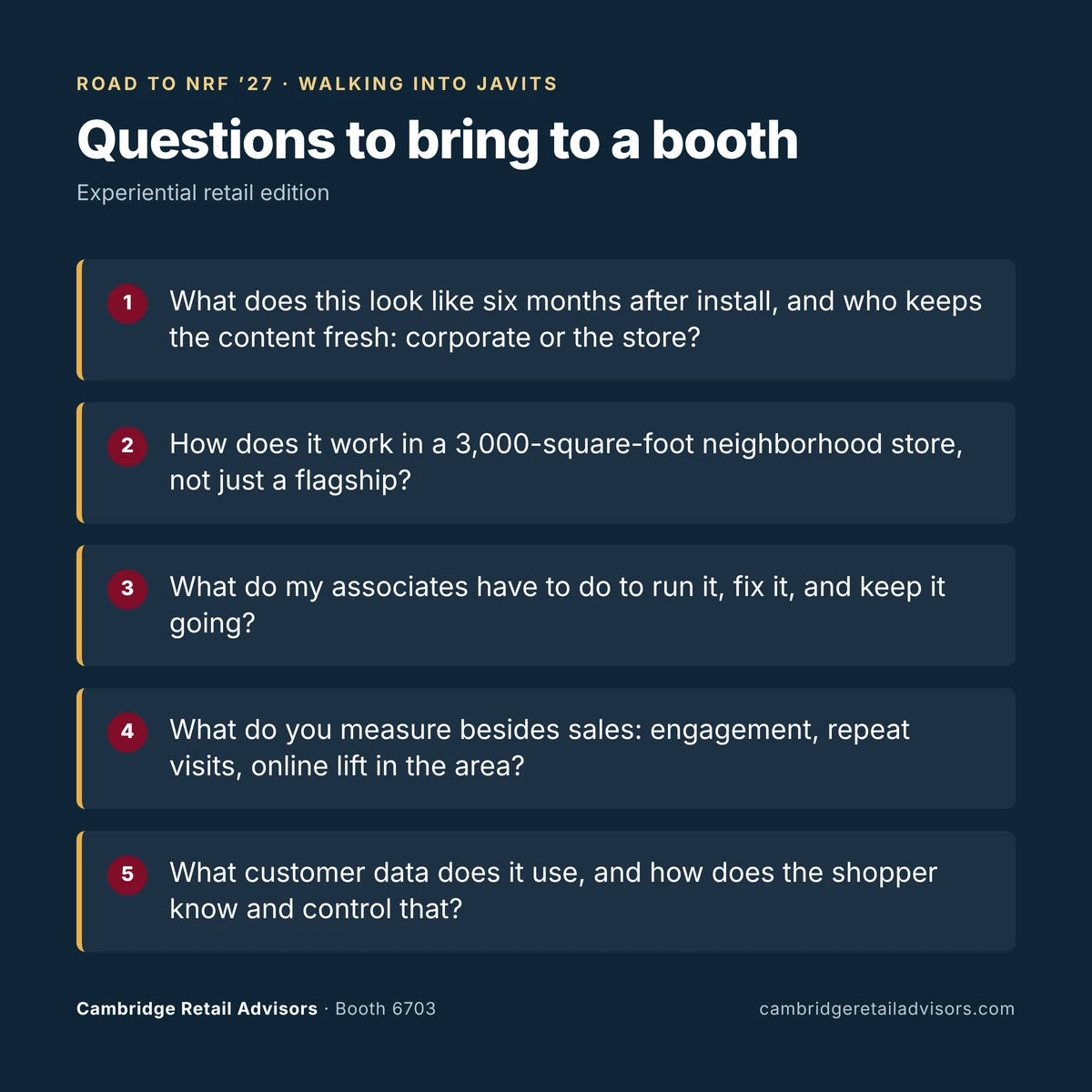
And whatever experiences we choose, they need to deliver value, be manageable, and continue evolving. A great demonstration at NRF is one thing. Making it work in a store, week after week, with actual customers and employees is something else.
That's what we're hoping to learn as we walk into Javits.
THE LENS
The three-page version for your next meeting.
The key numbers, three things to try, and the question to ask your team. Free PDF. No form.
Get The Lens