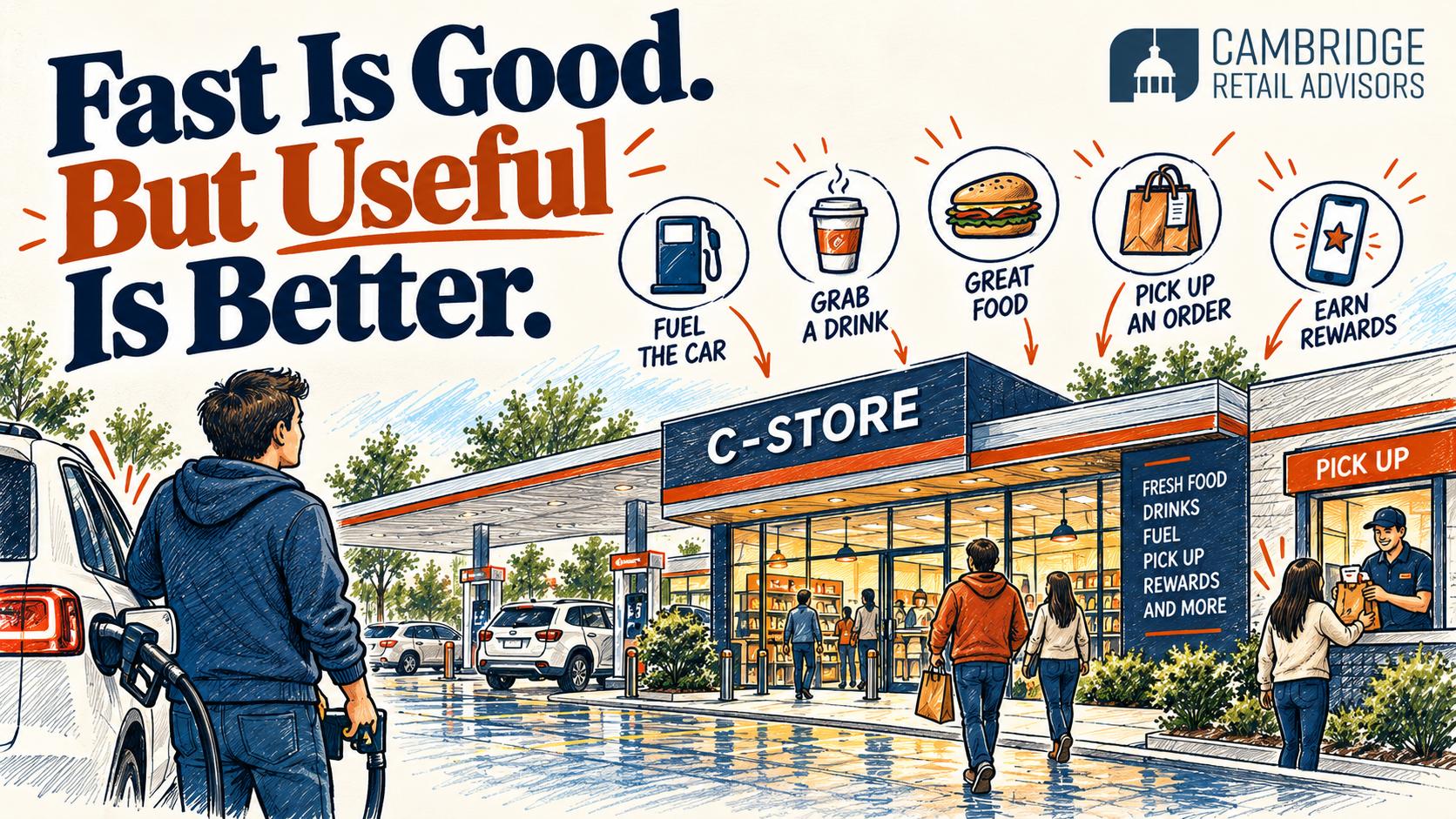


Convenience retail has always been built around a simple promise: get customers what they need and get them back on the road. But the experience around that promise is changing.
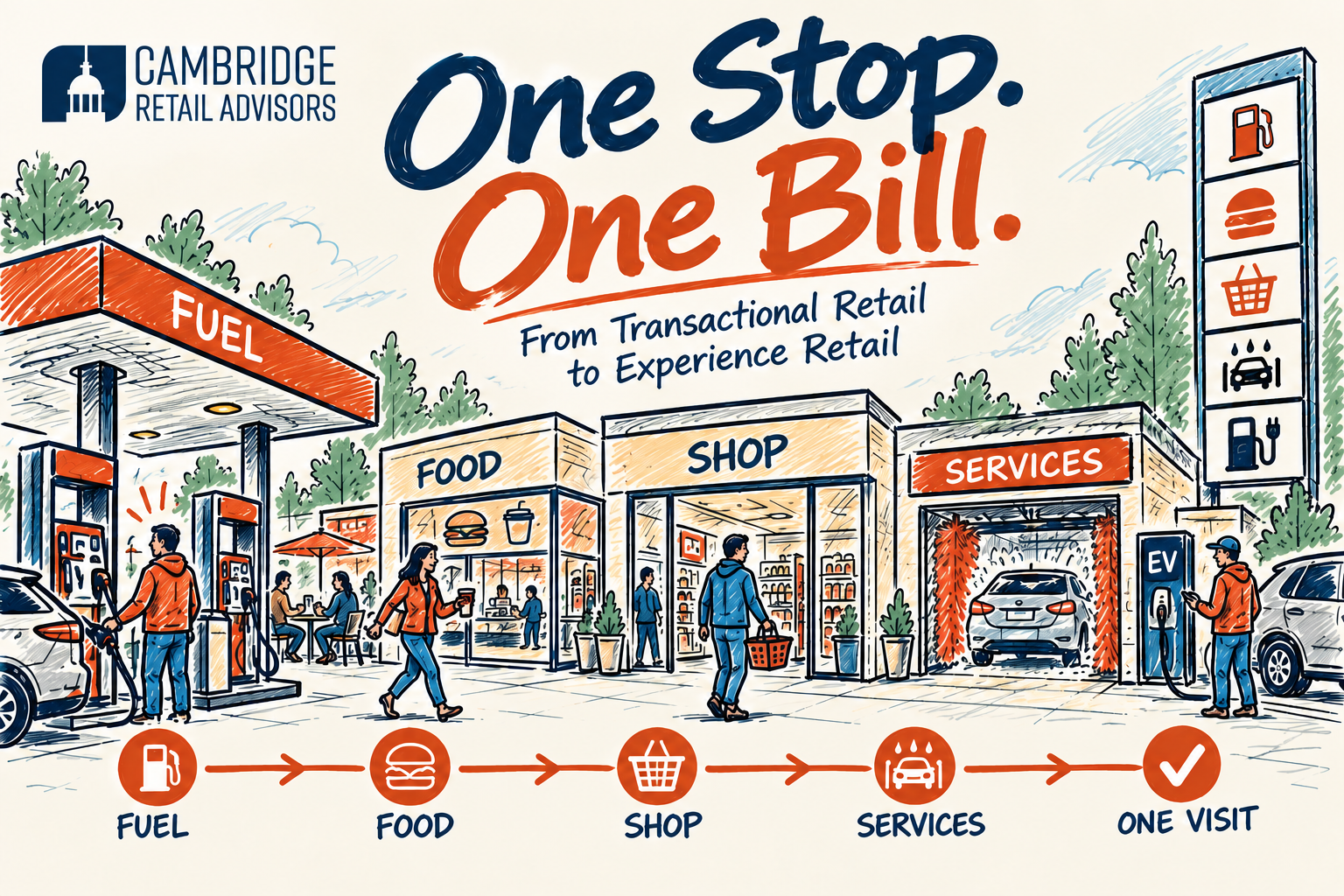
Better food, car washes, pickup, delivery, EV charging and other services are giving customers more reasons to do more during a single stop. Some visits may still last two minutes. Others may last twenty or thirty. That starts to move convenience away from purely transactional retail and toward experience retail.
And if the experience is becoming more connected, why should every new part of the visit still feel like a new transaction?
Our research found that 80.6% of consumers would probably or definitely value combining fuel and an in-store purchase into one bill, including 42.1% who said they would definitely value it. In a separate future-concepts question, 76.8% said one connected purchase across the pump, store and car wash would make them visit more often.
We tested the simple version, fuel plus an inside item on one bill. The bigger version is where it gets interesting.
Forty-two percent of consumers said they want to get in and out faster, while 41% want to combine the stop with another errand. Those are different missions, but they point toward the same opportunity: making the stop work better around the customer. Sometimes that means speed. Other times, it means connecting more of what they need into one experience.
From individual transactions to one connected visit
Imagine a customer starting at the pump. They check in through payment, loyalty or another one-time method. While fueling, they order food. They walk inside, grab a drink and add something else. Maybe they purchase a car wash before leaving.
Or consider an EV customer who may be there for twenty or thirty minutes. They get something to eat, sit down, grab another coffee and perhaps use another service while the vehicle charges.
Different missions, same question: why should the customer have to keep starting over?

We already experience versions of this at resorts and on cruise ships. Customers check in, establish who they are and connect a payment method. From there, they can move between food, merchandise, entertainment and other services without rebuilding the transaction every time.
The transactions are still happening. They just stop dominating the experience.
Silent transactions
I think of those as silent transactions.
Silent doesn't mean hidden. Customers should still be able to see what they have added, what they have spent, which rewards were applied and what remains open on their bill. That visibility could live on a phone, display, kiosk or another touchpoint throughout the visit.
The customer remains in control. The transaction simply moves out of the center of the experience.
There will always be moments when another checkpoint is necessary. Age-restricted products may require verification. Certain purchases may need confirmation. Security may require another identification step.
The opportunity is to remove the repetitive ones that don’t.
Better timing and better relevance
A connected experience also creates better opportunities to add value. If the customer has already identified themselves, the brand can recognize available rewards or introduce something relevant at the right point in the journey. Maybe a CPG partner has an offer that fits. Maybe a food promotion is beginning shortly. Maybe the EV customer has another twenty minutes and wants something to take with them when they leave.
The goal shouldn’t be more prompts. It should be better timing and better relevance.
Use people where people add the most value
There's also a people opportunity here that I think can get overlooked.
I’ve seen it firsthand in convenience stores. Some of the best people in the building — employees who naturally connect with customers, solve problems and make the experience better — can spend a significant amount of their time simply managing transactions.
That isn’t always the highest-value use of those people.
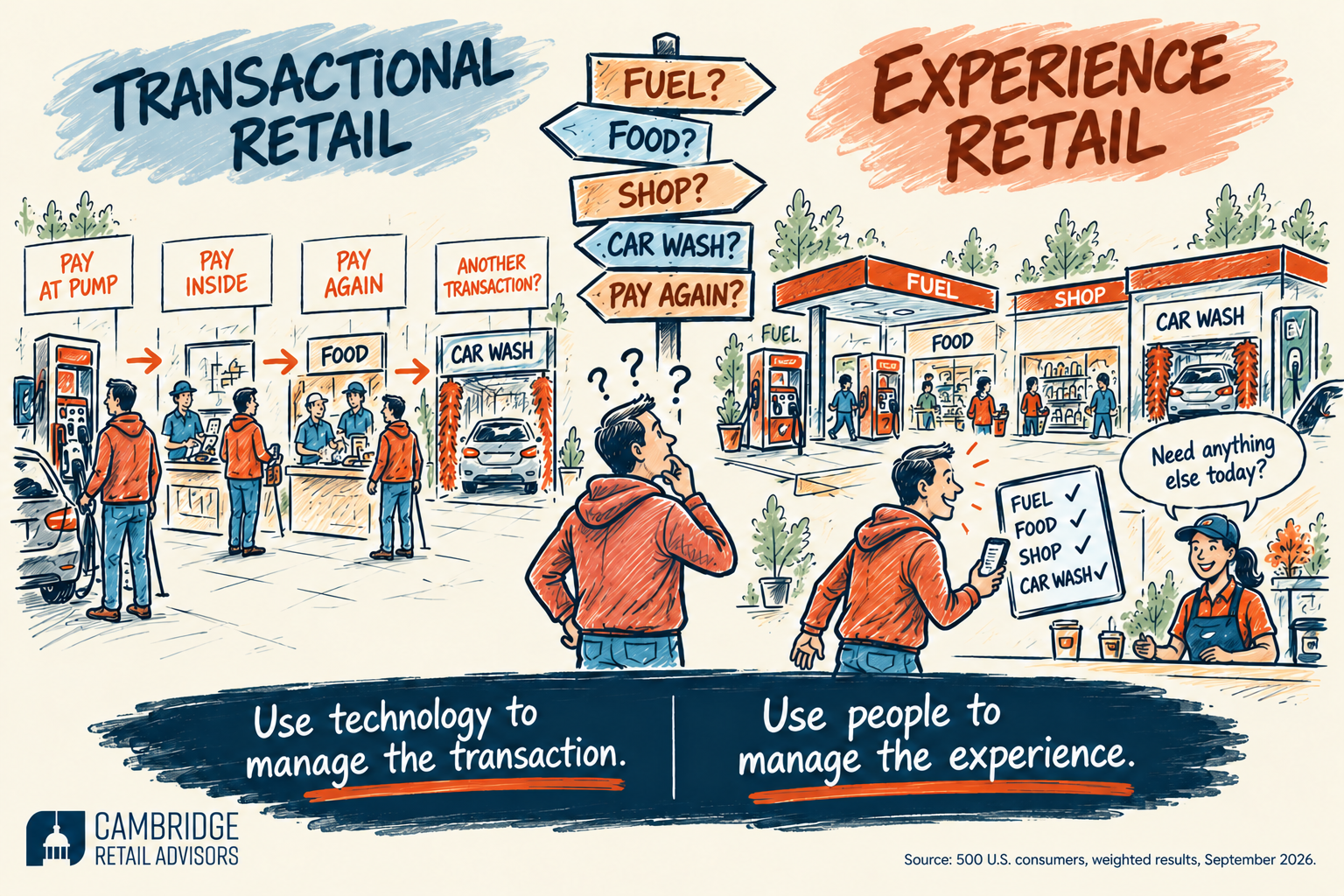
As more of the transaction moves quietly into the background, associates can spend more time doing what people do best: helping customers, solving problems, completing necessary verifications and making the overall experience better.
Managers can shift as well. Instead of having so much attention pulled toward transaction flow, they can spend more time managing the experience — staffing, service, food quality, store conditions, customer flow and how all of those pieces are working together.
That doesn’t mean removing people. It means using people where people add the most value.
Start with the customer journey
Nobody is doing the whole thing yet. Pay at the pump, loyalty in the app, scan-and-go, self-checkout, connected pumps, digital displays all exist. They're just still separate transactions. And there won't be one universal blueprint.
A travel center will approach this differently from an urban convenience store. A food-heavy location will have different needs from a fuel-first site. An EV-focused location may need to think differently about dwell time altogether. Services, partnerships, physical layouts, customer missions and existing technology architectures all shape the answer.
That’s why the strategy should begin with the customer journey, not the technology.
Where does the experience begin? When should the customer check in? What should remain visible as they move through the visit? Which checkpoints actually matter? What can happen quietly in the background? And where can employees and managers create more value by focusing on the experience instead of the transaction?
Convenience retail has spent decades getting very good at individual transactions.
Experience retail asks a different question:
How do we connect those transactions into one visit?
The transaction doesn’t disappear. It becomes part of the background — visible when customers need it, controllable when they want it, but no longer interrupting every step of the journey.
That may be the bigger opportunity behind one stop, one bill.
THE LENS
The three-page version for your next meeting.
The key numbers, three things to try, and the question to ask your team. Free PDF. No form.
Get The Lens