

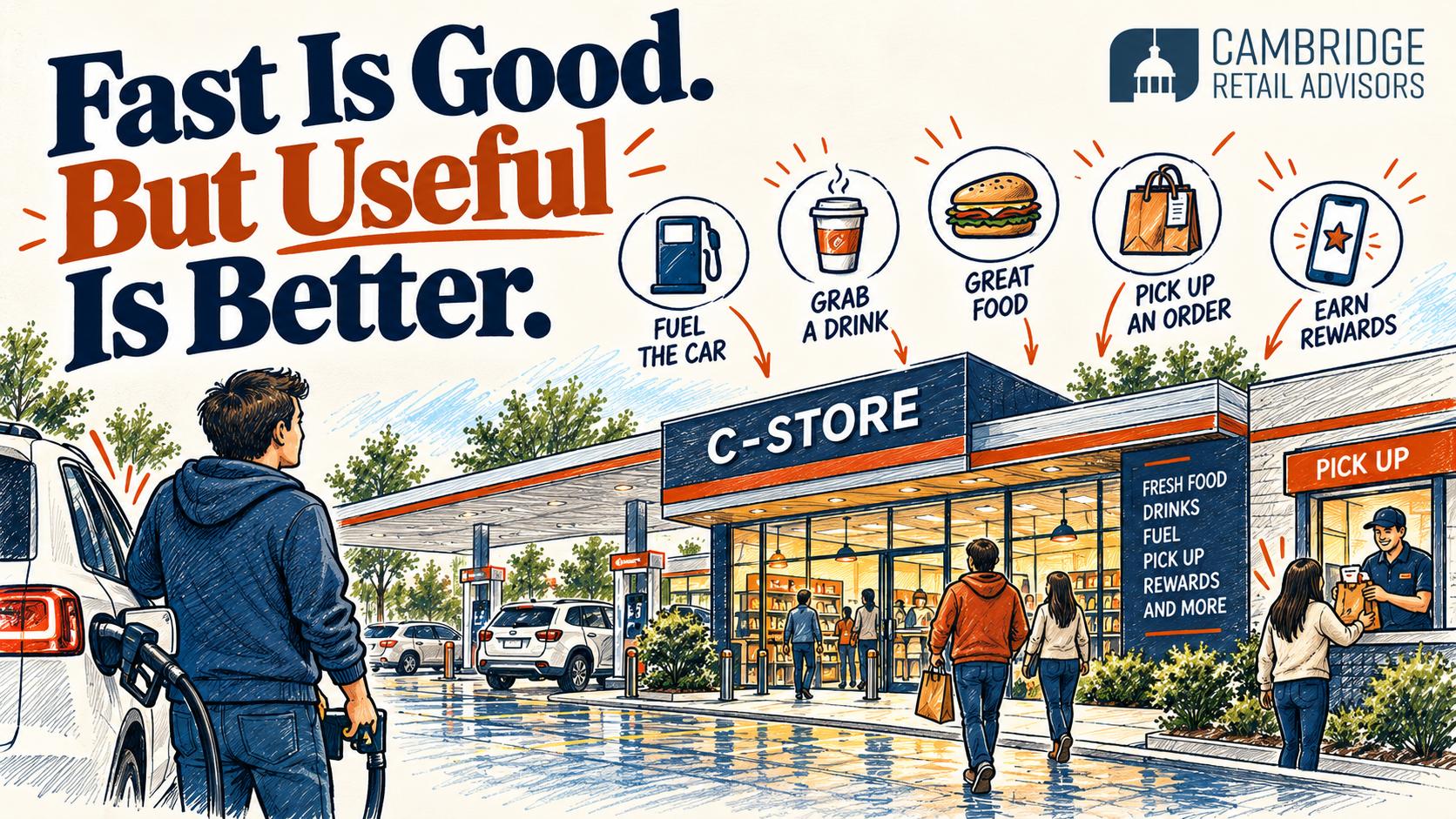
When most people think about the traditional fast-food or QSR experience, the first thing that comes to mind is speed. Fast food is supposed to be fast. Quick service is right there in the name, and for good reason.
But as we’ve all been seeing, food service is becoming a much bigger part of the convenience-store experience too. Operators are expanding kitchens, improving prepared food, and giving customers more ways to order and pick it up. NACS reported that food service accounted for 28.5% of c-store in-store sales in 2025 and 38.9% of in-store gross profit dollars.
So as c-stores compete for more of that quick-meal occasion, do they have to beat QSR at its own game?
We at Cambridge Retail Advisors asked 500 U.S. consumers what would make them choose a convenience store instead of a fast-food drive-through for a quick meal. Fuel or loyalty rewards led at 87.6%, followed by food being just as good at 85.7% and a lower meal price at 80.9%. Pickup without leaving the vehicle reached 74.6%, getting the food faster came in at 72.3%, and being able to order ahead and have it ready reached 70.4%.
Speed matters. It just isn’t the whole answer.
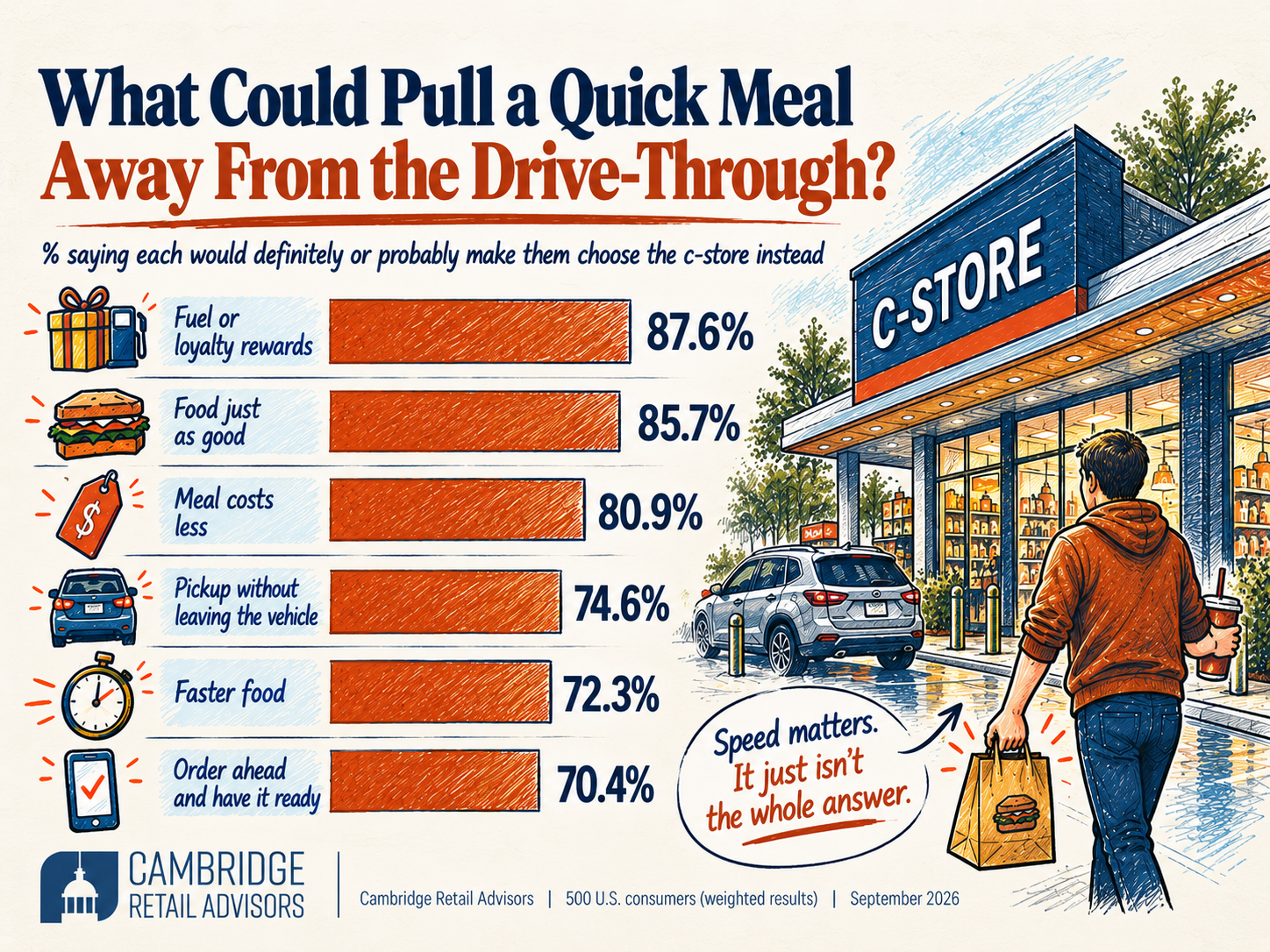
Speed did very well. In fact, everything we tested did well. Customers aren’t saying speed doesn’t matter. They’re saying there’s a lot more involved in choosing where to get that quick meal.
The drive-through can be part of it
There’s a reason convenience operators continue to look at drive-throughs.
Sheetz is a good example. In 2015, Convenience Store News reported that Sheetz had 49 stores with drive-throughs. When the company first tested the format, it offered a limited food service menu. After customers indicated they wanted access to more of what was available inside, Sheetz expanded the selection and said drive-through sales went from about 2% of inside sales to 10% at those locations.
What’s interesting isn’t just that the drive-through generated sales. Customers wanted the lane to give them access to more of the store.
Today, there are even more ways to think about that. One customer could order dinner in the app before arriving and pick it up at a window. Another could fuel, walk inside, use the restroom, grab a drink, and pick up dinner on the way back out. Someone else may want the food brought to the vehicle. Down the road, ordering could start while someone is at the pump or charging an EV.
A traditional drive-through may make sense at some locations. At others, it could be a pickup window, curbside, or something we haven’t really built out yet. The important part is giving the customer options rather than assuming everybody needs to follow the same path.
What happens during those ten minutes?
Think about ten minutes in a traditional drive-through. You pull into the lane, order, wait for the food, and leave. Good QSR operators have spent decades getting very good at that process.
A c-store starts with a different advantage because the customer may already have another reason to be there.
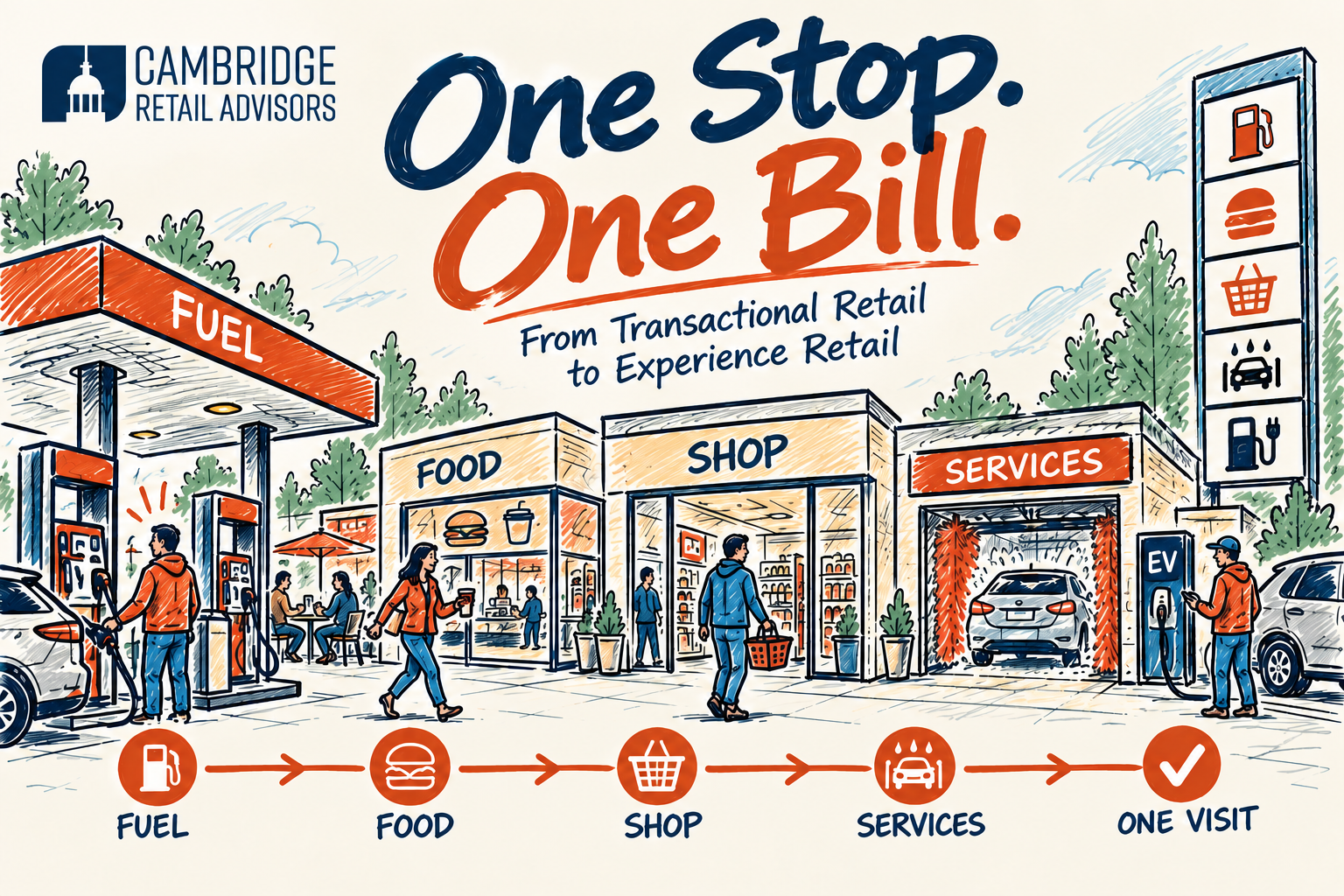
If I spend ten minutes at a convenience store and leave with my car fueled, dinner in the passenger seat, a drink for the road, and points that may make my next fill-up cheaper, I may not have spent fewer minutes than I would have in the drive-through. But I got a lot more done.

That’s still speed in one sense, but it’s also what convenience has always been about. Sometimes the win isn’t making one part of the trip 30 seconds faster. It’s eliminating the need for another stop altogether.
We saw some of that in another question. When we asked where consumers ate their most recent prepared c-store food purchase, 37.5% said at home, 18.4% said while driving and another 17.3% ate it in their vehicle while still at the store. Only 7.3% ate inside or outside at the convenience store itself.

That doesn’t mean there isn’t a place for better seating, work areas, or places to hang out. But better food service doesn’t automatically mean customers want a traditional restaurant experience either. Sometimes they want good food, they want it to fit into everything else they’re doing, and they want to decide where they eat it.
The food still has to earn the trip
None of those options matter much if the food doesn’t compete. Food being just as good as the fast-food alternative was one of the strongest responses we saw at 85.7%.
The app can’t compensate for the sandwich.
You can build the loyalty program, add order-ahead, and put a pickup window on the building, but quality still has to earn the right to compete for the meal occasion.
That’s why QuikTrip’s new Gen 4 format is worth watching. QT says the design roughly doubles the kitchen footprint compared with previous stores, with more room for kiosk ordering, food pickup, and waiting while retaining the traditional fueling experience. The format also gives locations room to test additional pickup and delivery approaches.
I like that because it isn’t betting everything on one answer. It’s making the food operation more capable and then creating different ways for the customer to use it.
Maybe the advantage is the whole stop
Our survey doesn’t give us one magic feature. Rewards, food quality, and price were all above 80%. Vehicle pickup, speed, and order ahead were all above 70%.
A QSR can do many of those things extremely well. But c-stores have the opportunity to connect them in ways a standalone restaurant often can’t. The meal can tie back to fuel rewards. Order ahead can happen while the customer is already making the fuel stop. Pickup can be at a window, in the store, or potentially at the vehicle. And the same customer may choose a different option the next time they come in.
So, yes, speed matters. Drive-throughs can matter too. But if c-stores only look at the QSR next door and ask how to run the same playbook faster, I think they’re leaving part of their advantage on the table.
The drive-through may own the lane. Convenience can own the trip.
THE LENS
The three-page version for your next meeting.
The key numbers, three things to try, and the question to ask your team. Free PDF. No form.
Get The Lens