01
Start with the journey
Follow the customer and associate through the moments that matter instead of optimizing each channel in isolation.



Heading to NRF ’27? Let’s connect and talk about your retail priorities.
Let's Connect at NRFFollow the Road to NRF ’27 →
From checkout and foodservice to pickup and in-store assistance, every interaction shapes the customer experience. Make it easier for customers and the people serving them.
Customers don't see separate systems, departments, or processes. They expect things to work together, whether they're shopping, picking up an order, or asking an associate for help.
Making that happen requires the right processes, technology, and tools to support the people delivering the experience.
Follow the customer from browsing and product discovery through checkout, pickup, and returns. Then look at the systems and processes supporting each interaction, including inventory, order management, payments, and associate tools.
That's where you begin to identify gaps, improve workflows, and make the experience better for everyone.
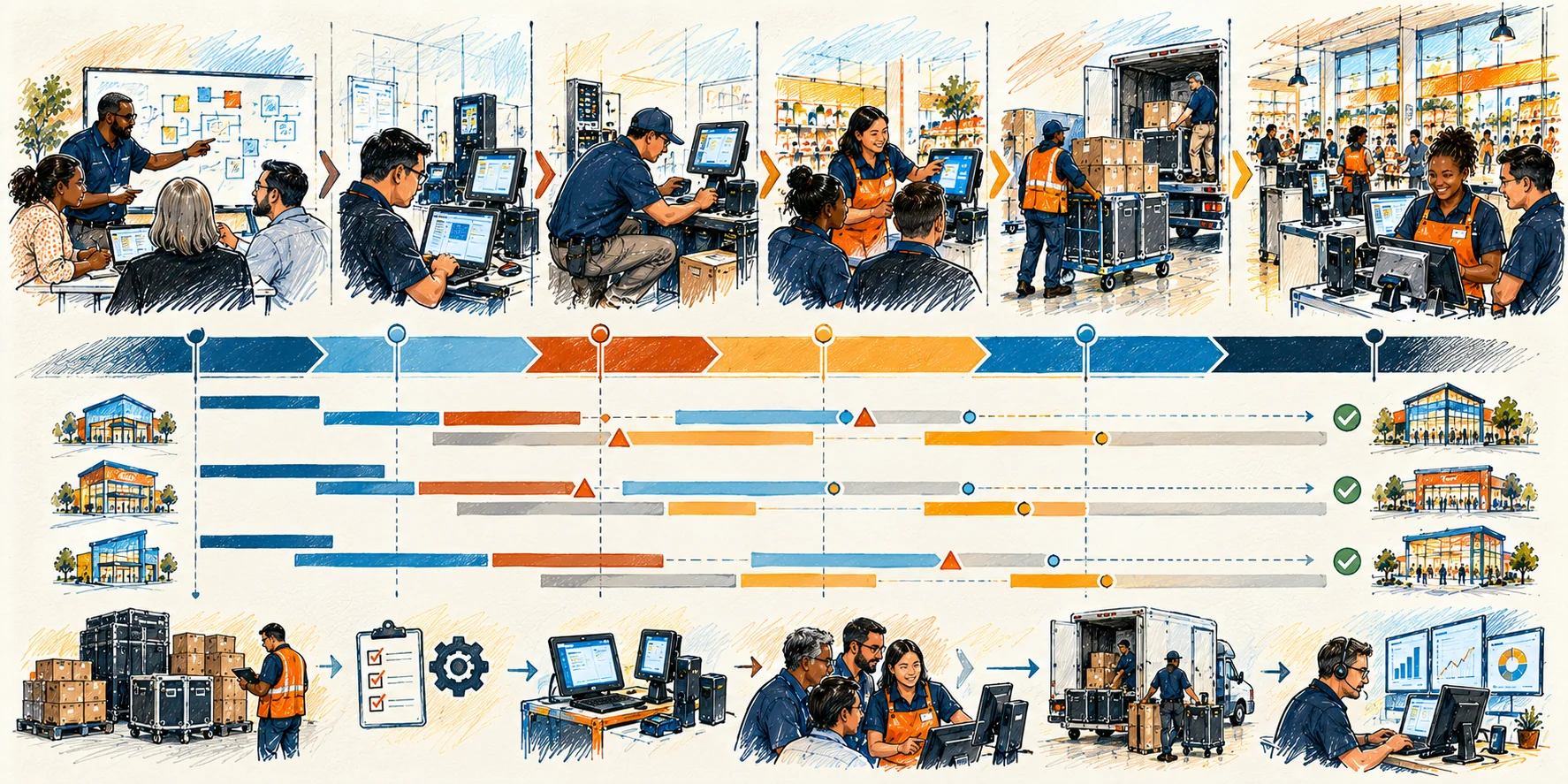
Start with the journey, then use process and technology where they make the experience faster, clearer or more useful.
Follow the customer and associate through the moments that matter instead of optimizing each channel in isolation.
Align inventory, orders, identity, payments and frontline tools behind the experience the brand wants to deliver.
Test queues, handoffs, prompts and associate workload under busy-day conditions before rollout.
From customer journey design to store operations, order fulfillment, checkout, and frontline technology, here's where we help retailers make improvements
CUSTOMER JOURNEY DESIGN
Connect the moments that matter—from browsing and buying to pickup, returns, and support—into one seamless customer journey.
✓ Journey mapping across store and digital touchpoints
✓ Friction-point identification
✓ Experience principles and service standards
✓ Cross-channel handoff design
✓ Priority improvements by journey stage
FRONTLINE WORKFLOW & STORE OPERATIONS
If the associate taps through six screens to help one guest, the experience is already lost. Fix the shift, not just the screen.
✓ Associate workflow assessment
✓ Task, tool and process simplification
✓ Store labor and execution considerations
✓ Exception handling and service recovery
✓ Operational design aligned to the customer journey
ORDER MANAGEMENT & OMNICHANNEL HANDOFFS
BOPIS, curbside, ship-from-store, returns — the customer shouldn’t be able to tell where one system ends and the next begins.
✓ BOPIS, curbside and pickup flow design
✓ Inventory visibility and store handoff review
✓ Order status and communication checkpoints
✓ OMS selection and cross-channel order orchestration
✓ Process design for store-level execution
CHECKOUT, RETURNS & SERVICE
Speed, clarity, control — and a plan for the exceptions, because real stores have them every hour.
✓ Checkout and payment experience review
✓ Return and exchange workflow design
✓ Service desk and exception processes
✓ Queue, wait-time and escalation considerations
✓ Consistency across store and digital service moments
STORE SYSTEMS & ASSOCIATE TOOLS
POS, OMS, CRM, the handheld — the tools should make the job easier, not add a step.
✓ POS, OMS, CRM and service-tool alignment
✓ Associate tool and usability review
✓ Process and system dependency mapping
✓ Capability gaps and integration needs
✓ Roadmap priorities for store enablement

For a global personal care retailer, CRA tied omnichannel strategy to the inventory behind it — systems, forecasting, and store-level practice.
When the customer journey feels fragmented, the answer is usually not another isolated feature. Start with how the whole experience needs to work.
Discuss Your Store Experience →