


In a lot of convenience stores, changing a price still means somebody going out with a stack of new labels. Depending on the store, that can mean an hour or two changing everything, staying late, or even bringing in a third party to get it done.
That's about to change. Supposedly. We've been seeing it at NRF and other shows, and now at NACS. Electronic shelf labels are coming more into play, and it's slowly becoming reality. Walmart is the obvious example, and H&S Energy is rolling them out across its convenience-store network. It’s coming.
And there have been some lessons learned already, Wendy's being the big one, on how this should and shouldn't work.
So with all the technology coming, all the hot topics being talked about for NACS, plus the uh-ohs we've already seen, we thought it would be a good idea to go to customers and get their take.
We at Cambridge Retail Advisors (CRA) asked 500 U.S. consumers which pricing practice would bother them most. Prices changing frequently without an explanation led at 22.8%. Time-of-day pricing followed at 21.1%, different customers seeing different prices at 19.6%, and prices increasing during busy periods at 18.1%. Loyalty members getting lower prices was considerably less objectionable at 11.5%. Only 6.9% said price changes generally don't bother them.
Customers aren't rejecting change. They're rejecting change they can't read.
Cambridge Retail Advisors • 500 U.S. consumers • Weighted results • September 2026
Wendy’s learned what happens when customers fill in the blank
Wendy’s is one of those lessons learned, one of those “what did we learn from this?” moments for the industry. It happened outside convenience, but the lesson applies.
In 2024, as AP News reported, Wendy’s discussed digital menu boards along with the capabilities for dynamic pricing and AI-enabled menu changes. What customers heard was something much more specific: surge pricing for hamburgers.
People pictured a lunch rush. The line is long, the drive-through is backed up, and the price of a burger goes up. Like Uber surge pricing when you’re trying to get a ride home and the price just jumped.
Wendy’s had to clarify. In its own statement, the company said it had no plans to raise prices when customers were visiting most. Instead, it said digital menu boards could make it easier to offer discounts and value during slower times of day.
I think that sequence matters more than the Wendy’s example itself. The company talked about dynamic pricing, customers didn’t know exactly what that meant, and they supplied their own answer.
That’s the risk as retailers get more sophisticated with digital pricing. The technology may be capable of changing a price for perfectly reasonable reasons, but if the customer doesn’t understand the rule, the technology isn’t going to explain itself.
What Wendy’s ended up describing isn’t exactly the same thing as fuel pricing. Fuel prices move for different reasons, tied to costs and market conditions. But it points toward something convenience already understands well: a price can move without the movement itself becoming the problem.
Convenience already has a better example
Morning price, evening price, same sign.
Convenience stores already deal with a price customers expect to move: fuel. They may not know every factor behind the change, and they may not like it when the number goes up, but the movement itself isn’t a surprise. The price is right there on the sign for everyone to see.
Inside the store, digital pricing creates a lot more possibilities. A price could change because a promotion started, inventory is getting old, a loyalty offer kicked in, or a retailer is testing a different price at a different time of day.
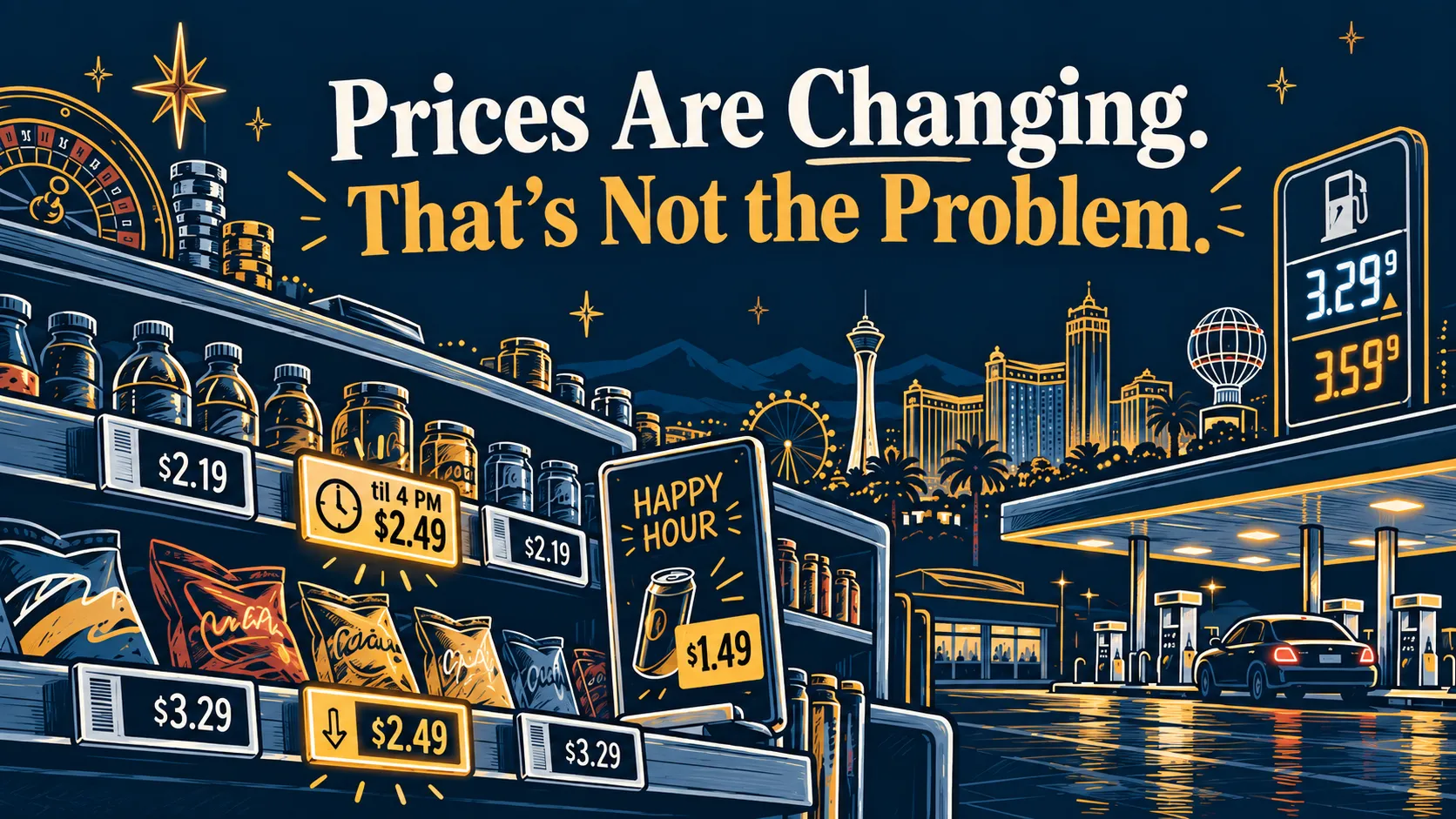
The easiest comparison may be a happy hour. Nobody is confused when the lower price is posted everywhere and the window is clear. $2.49 from 2–4 PM. Regular price $3.49.
When 4:00 hits and the price goes back up, the customer understands why. The price didn’t suddenly surge. The offer ended.
That’s where digital shelf labels and store screens can actually help. They don’t just make changing prices easier. They can make the reason for the change visible too.
That gets us right back to what customers told us.
Nearly one in five respondents said different customers being shown different prices was the pricing practice that would bother them most. That’s the piece I’d be watching as pricing gets more sophisticated, because it changes the question from “Why did the price change?” to “Why is my price different from yours?”
There’s some outside research pointing in the same direction. RetailNext’s 2026 Shopper Sentiment Report surveyed 1,053 nationally representative U.S. shoppers in February and found that 33.9% said unfair or unpredictable pricing would make them stop shopping with a retailer altogether. RetailNext reported that the concern ranked ahead of poor product quality and bad service.
So I don’t think the lesson for convenience is that prices can’t move. We already know they can. The technology is only going to make it easier to do, whether that’s a two-hour promotion, a clearance price, a loyalty offer, or something we haven’t thought of yet.
The question is whether the customer can read what happened and whether the rule feels fair.
If an employee gets asked why a price changed, is there an answer? If the customer sees the change in an app, is the reason apparent? If the shelf label updates, does the offer around it make sense?
If a price moves while a customer is standing there, can you say why in one sentence? If not, it’s not a strategy. It’s a surprise.